








|
Product Details:
|
|
| Place of Origin: | Made in China |
|---|---|
| Brand Name: | BTUTEST |
| Certification: | SGS, INTERTEK |
| Model Number: | BTU-CVP-4 |
|
Payment & Shipping Terms:
|
|
| Minimum Order Quantity: | 1 set |
| Price: | Negotiable |
| Packaging Details: | Soil Testing Equipment Standard export wooden box |
| Delivery Time: | 6 days after payment |
| Payment Terms: | L/C, D/A, D/P, T/T, Western Union |
| Supply Ability: | 100 sets per month |
|
Detail Information |
|||
| Structure: | 4-gang (4 Independent Channels) | Specimen Diameter: | 100 Mm |
|---|---|---|---|
| Specimen Height (flow Path): | 100 Mm | Head Range: | 0- 600 Mm |
| Head Resolution: | 1 Mm | Head Accuracy: | ±0.3% Of Full Scale |
Product Description
Description
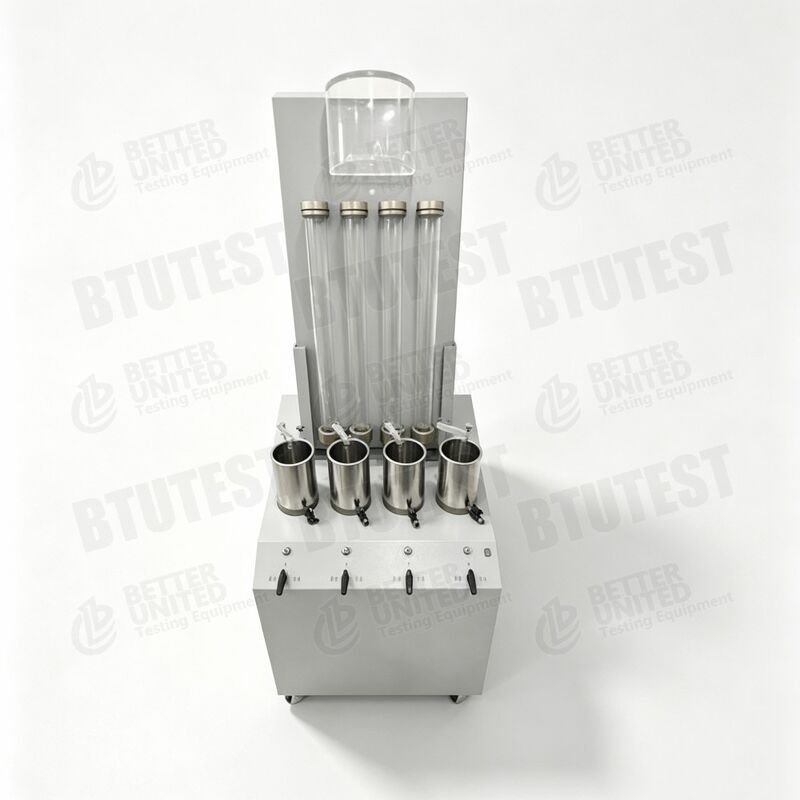
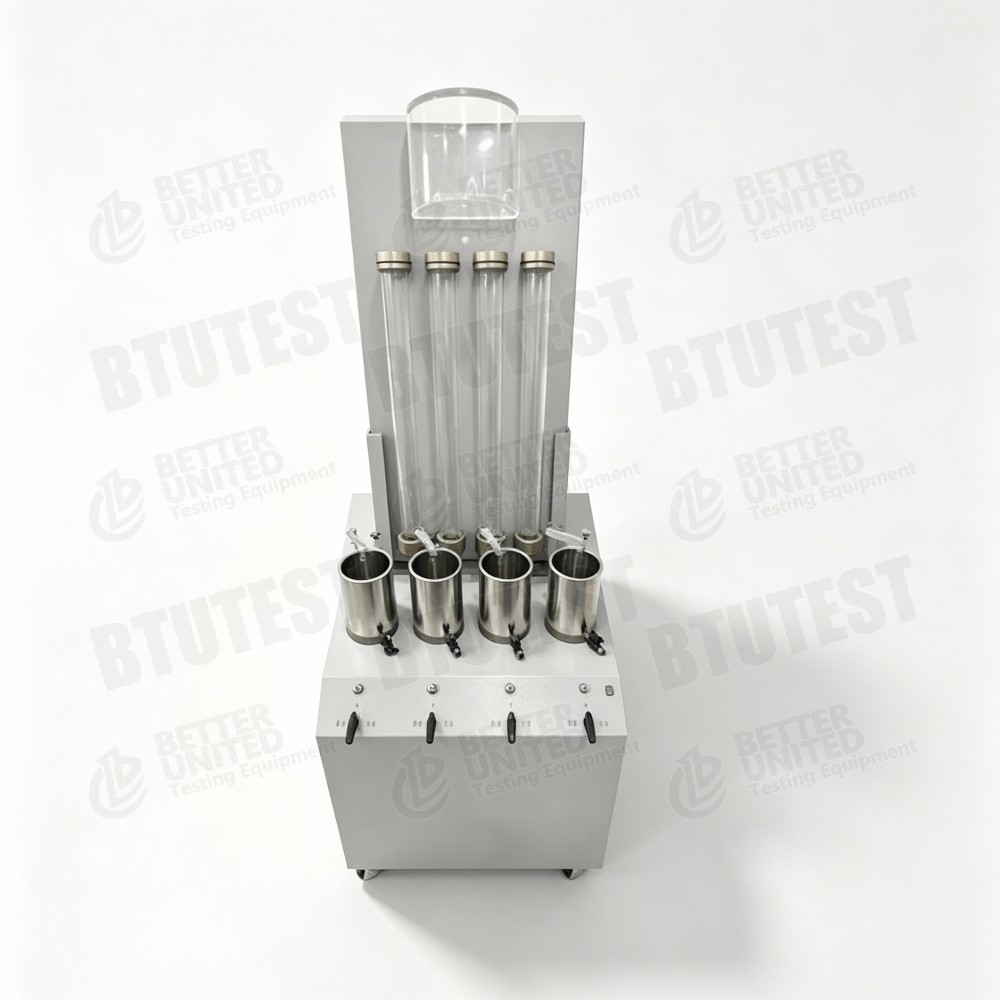
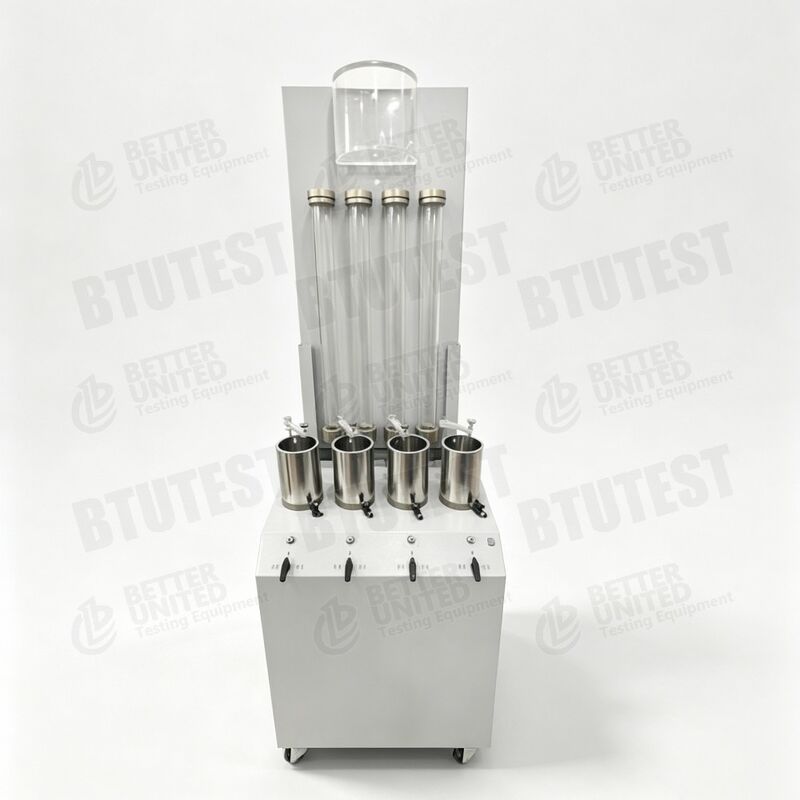
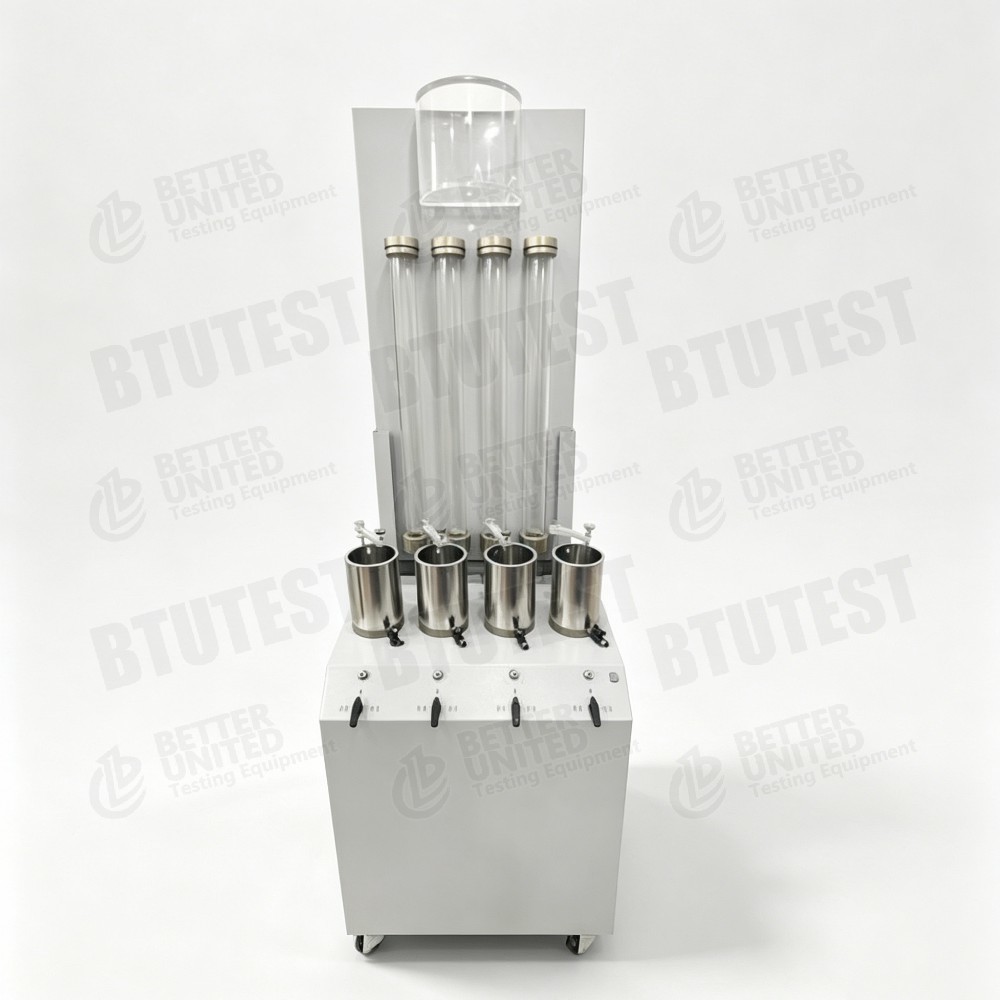
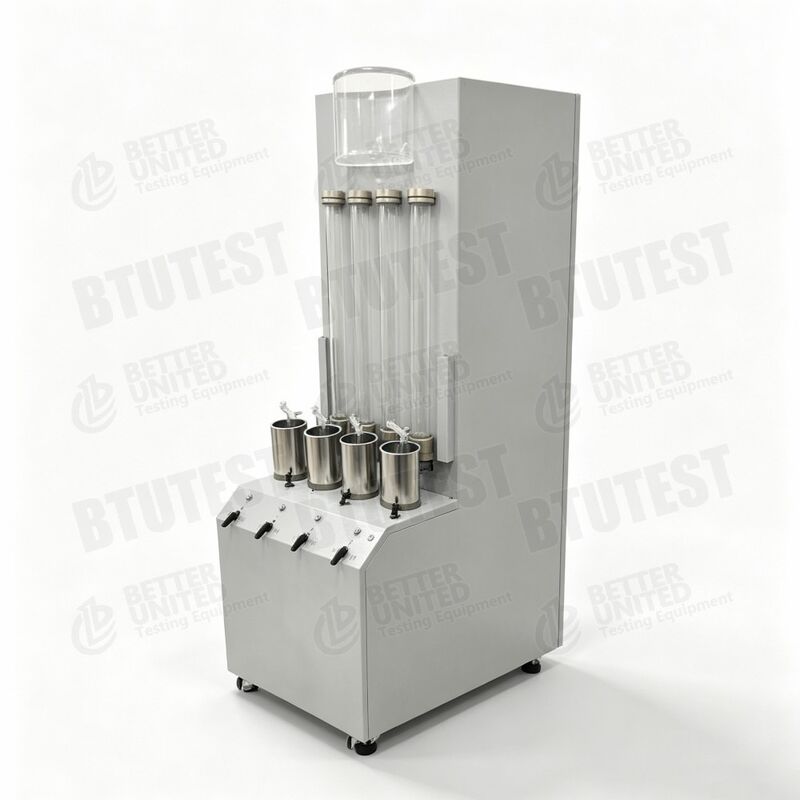
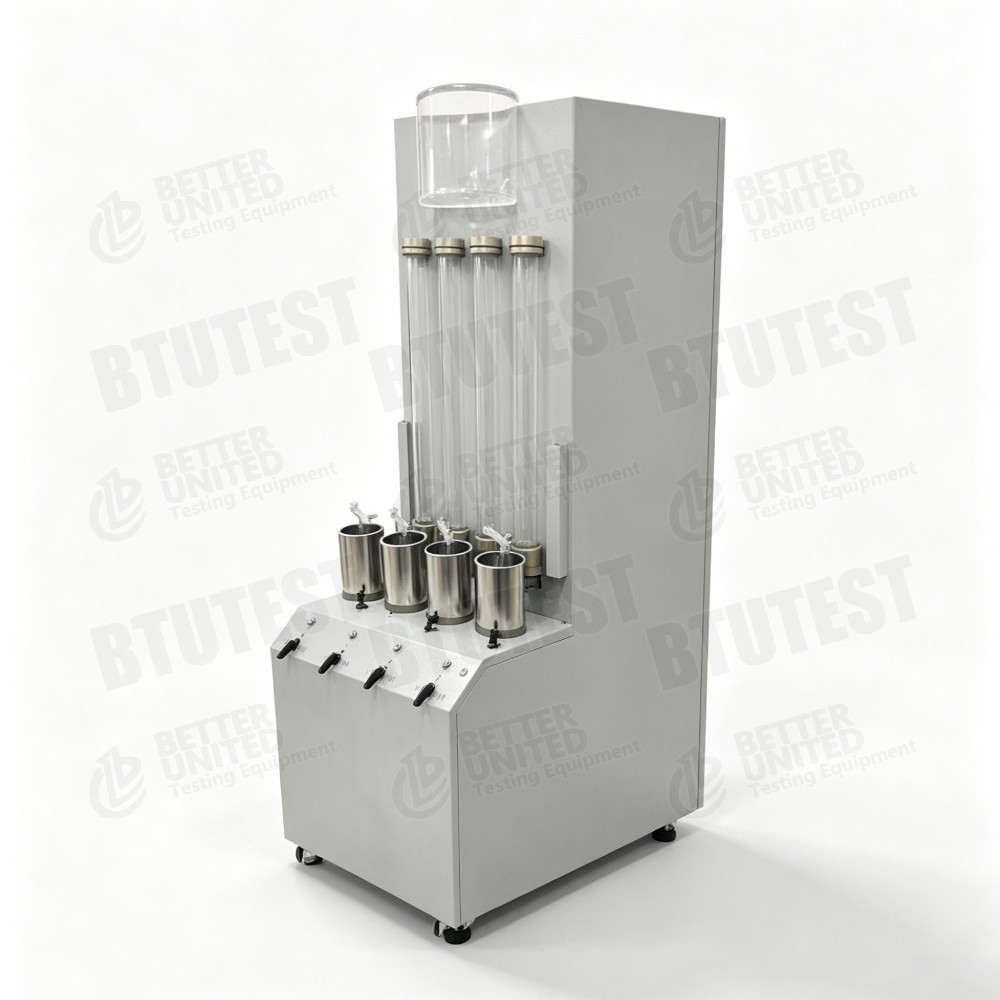
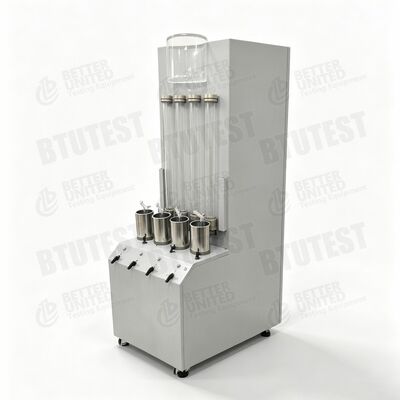
The BTU-CVP-4 intelligent fully automatic 4-gang variable head permeameter is a laboratory apparatus used to determine the permeability coefficient of sandy soils or soil‑aggregate mixtures. It features a 4-gang structure allowing simultaneous variable head permeability tests on four soil specimens. The instrument includes a built‑in multi‑channel data acquisition unit and dedicated post-processing software for automated data collection and analysis.
Test Standards
l ASTM D2434(Standard test method for permeability of granular soils)
l ASTM D5084(Standard test methods for measurement of hydraulic conductivity of soils using variable head)
l ISO 17892-11(Geotechnical laboratory testing- Determination of permeability)
l GB/T 50123-2019(Standard for geotechnical testing method- Variable head permeability section)
Specification
| Item | Parameter |
| Structure | 4-gang (4 independent channels) |
| Specimen diameter | 100 mm |
| Specimen height (flow path) | 100 mm |
| Head range | 0- 600 mm |
| Head resolution | 1 mm |
| Head accuracy | ±0.3% of full scale |
| Applicable materials | Sandy soils or aggregate mixtures |
| Data acquisition | Built-in multi-channel unit, simultaneous acquisition of 4 channels |
| Software | Dedicated post-processing software |
| Water supply tank capacity | Approx. 2 L (automatic refill by micro pump) |
| Water level measuring tubes | Two sets of acrylic tubes, 20 mm diameter |
| Valve configuration | 3-way 2-position ball valve + hand‑tightened reaction device (prevents particle loss) |
Detail
l Permeability cell: Includes cell, cell base, upper pressure piston, fixing bracket, etc.
l Anti-particle loss design: The base is equipped with a 3-way 2-position ball valve and a hand‑tightened reaction device to prevent loss of coarse particles during testing.
l Water supply system: A micro pump automatically fills the 2 L water tank to maintain a stable head.
l Water level measuring panel: Two sets of acrylic water level tubes (20 mm diameter) allow clear reading of head height (0-600 mm).
l Automated data acquisition: Built-in multi-channel acquisition unit simultaneously records permeability data from 4 channels, reducing manual errors.
l Post-processing software: Dedicated software for data management, permeability coefficient calculation, and report generation.
Application
Advantages
l 4-gang high efficiency: Tests up to 4 specimens simultaneously, greatly improving testing throughput – ideal for batch testing.
l Suitable for coarse-grained soils: Specifically designed for sandy soils and mixtures, overcoming clogging or particle loss issues common in conventional permeameters.
l High-precision head measurement: 1 mm resolution, ±0.3% FS accuracy ensures reliable data.
l Highly automated: Built‑in acquisition unit + software for real‑time head monitoring and automatic k‑value calculation.
l Anti-loss design: Hand-tightened reaction device and 3‑way ball valve effectively prevent fine particles from being washed away.
l Large specimen size: Φ100mm* 100mm specimen provides a more representative sample for coarse‑grained soils.
What To Choose
| Requirement | Recommendation |
| Multiple sandy soil specimens need simultaneous testing | 4-gang structure- tests 4 samples in one run |
| Coarse-grained or gravelly soils | Anti-particle loss design; dedicated structure prevents clogging and fines loss |
| Automation and data accuracy required | Built-in acquisition unit + software reduces human error and automatically calculates k-value |
| University or laboratory batch testing | High efficiency, stable performance-suitable for teaching and production testing |
| Need clear visual observation of head | Acrylic water level tubes allow direct reading while the system automatically records |
Process Flow
l Specimen preparation: Prepare a Φ100mm × 100mm sandy soil or mixture specimen according to standard procedures.
l Specimen installation: Place the specimen into the permeability cell, ensuring a good seal with no side leakage.
l System connection: Connect the water level tubes, water supply tank, 3‑way valve, and data acquisition unit.
l Saturation and degassing: Saturate the specimen using the water supply system and remove air bubbles from the lines.
l Set initial head: Set the initial water head height (within 0–600 mm range).
l Start test: Activate the pump to maintain head; the acquisition unit automatically records water level vs. time for all 4 channels.
l Calculate permeability coefficient: The software automatically computes the permeability coefficient for each specimen using the variable head formula.
l Generate report: Produce a test report including head‑time curves and permeability coefficient results.
Enter Your Message

Try our best,make things better. People first,Innovative Productivity,Common Solutions
| Hebei Better United Import And Export Co., Ltd. |
| Hejie Town,Xianxian County,Cangzhou City,Hebei Province,China |
| 86-151-2879-5929 |
| sales@btutest.com |