







|
Product Details:
|
|
| Place of Origin: | Made in China |
|---|---|
| Brand Name: | BTUTEST |
| Certification: | SGS, INTERTEK |
| Model Number: | BTU-RCA-1 |
|
Payment & Shipping Terms:
|
|
| Minimum Order Quantity: | 1 set |
| Price: | Negotiable |
| Packaging Details: | Soil Testing Equipment Standard export wooden box |
| Delivery Time: | 6 days after payment |
| Payment Terms: | L/C, D/A, D/P, T/T, Western Union |
| Supply Ability: | 100 sets per month |
|
Detail Information |
|||
| Maximum Pressure Chamber Rating: | 1.5 MPa | Cell Pressure Control Range: | 0 ~ 0.9 MPa |
|---|---|---|---|
| Cell Pressure Loading Method: | Pneumatic Loading, Servo Proportional Valve Control | Cell Pressure Accuracy: | ±0.1% F.S. |
| Soil Specimen Sizes: | Φ39.1 Mm Or Φ50 Mm | Excitation Type: | Electromagnetic (4 High-voltage, High-magnetic Excitation Coil Sets) |
Product Description
1. Description
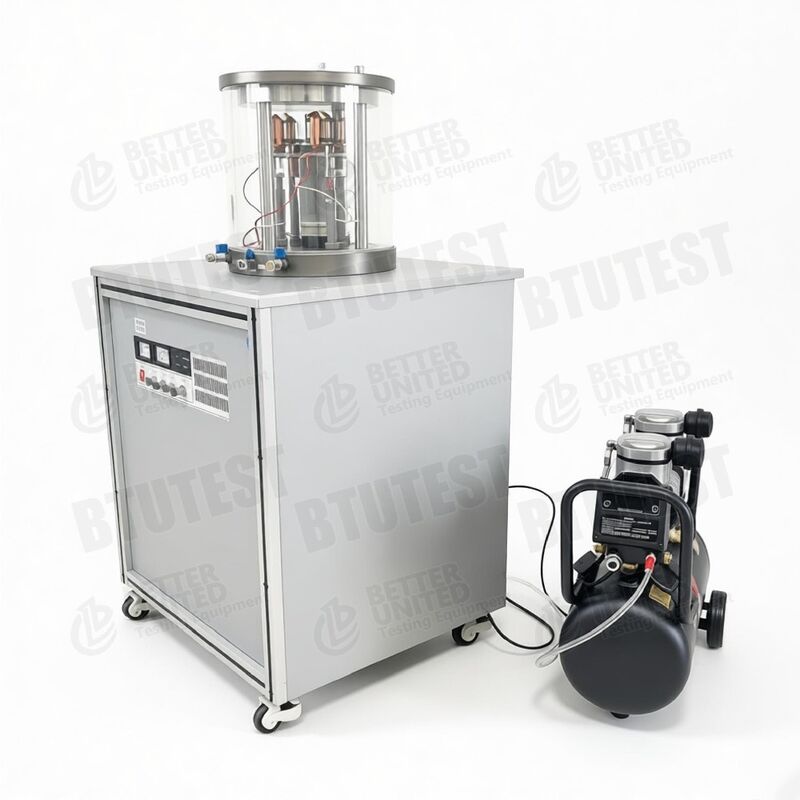
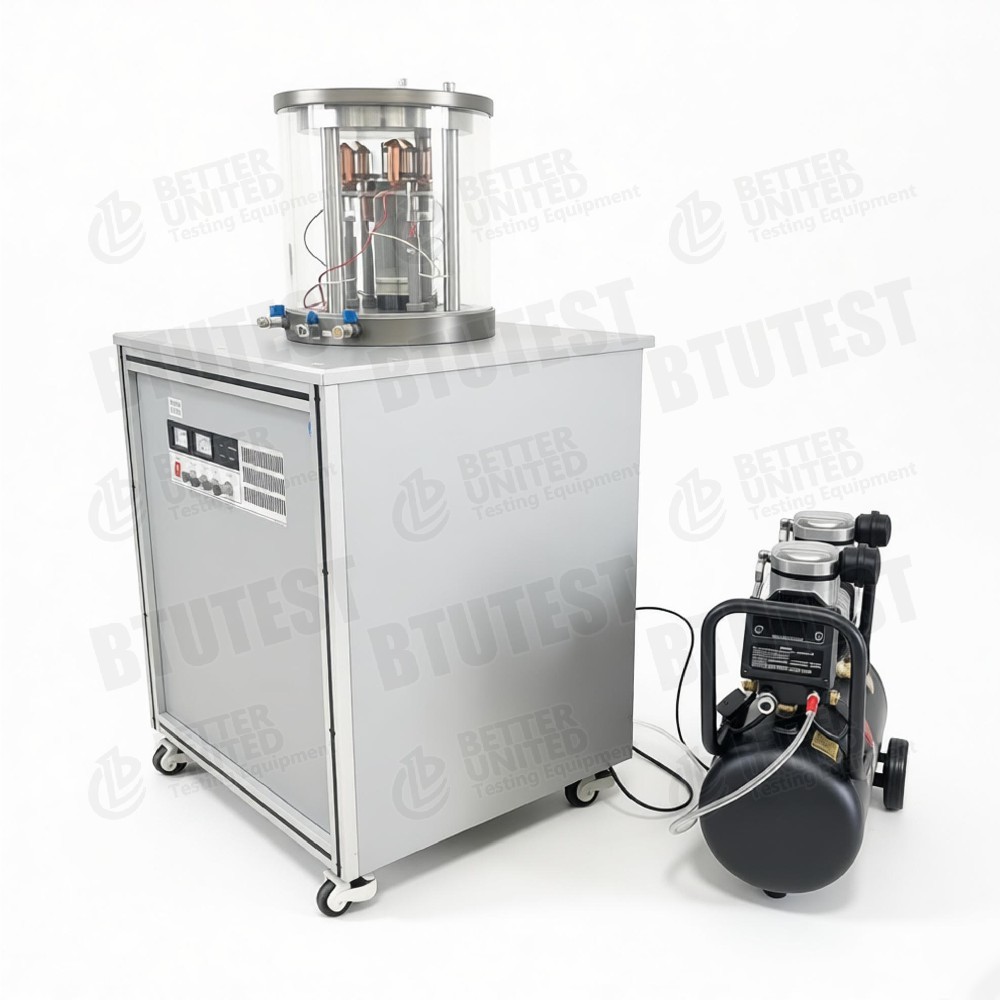
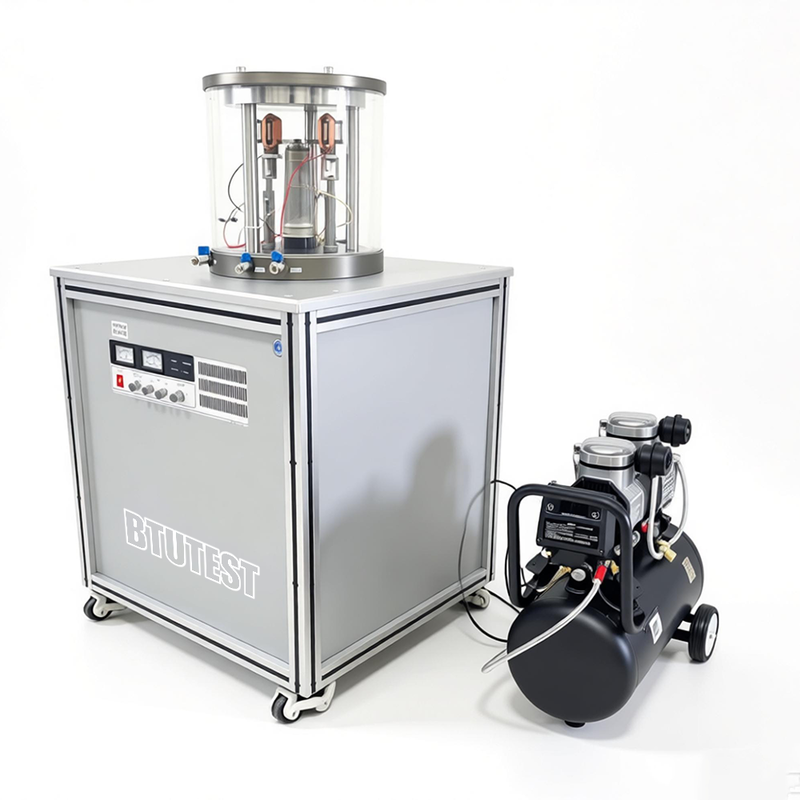
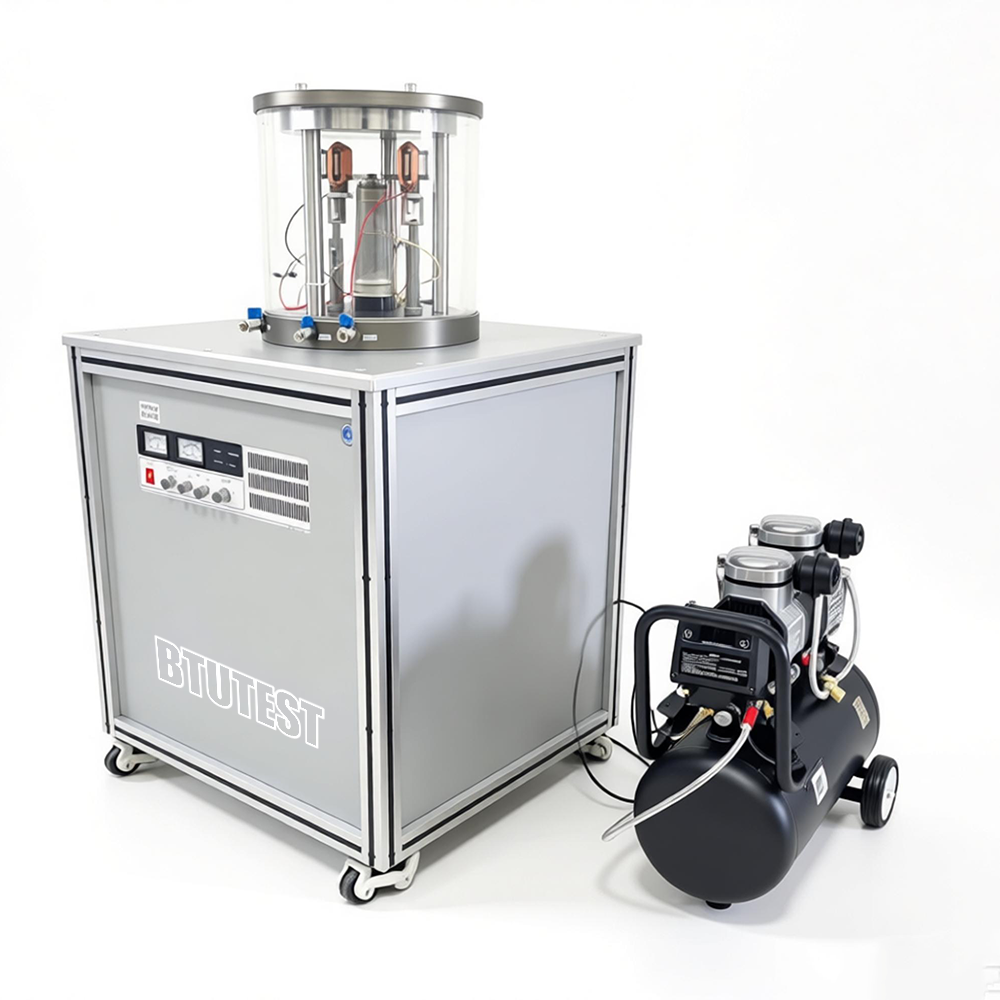
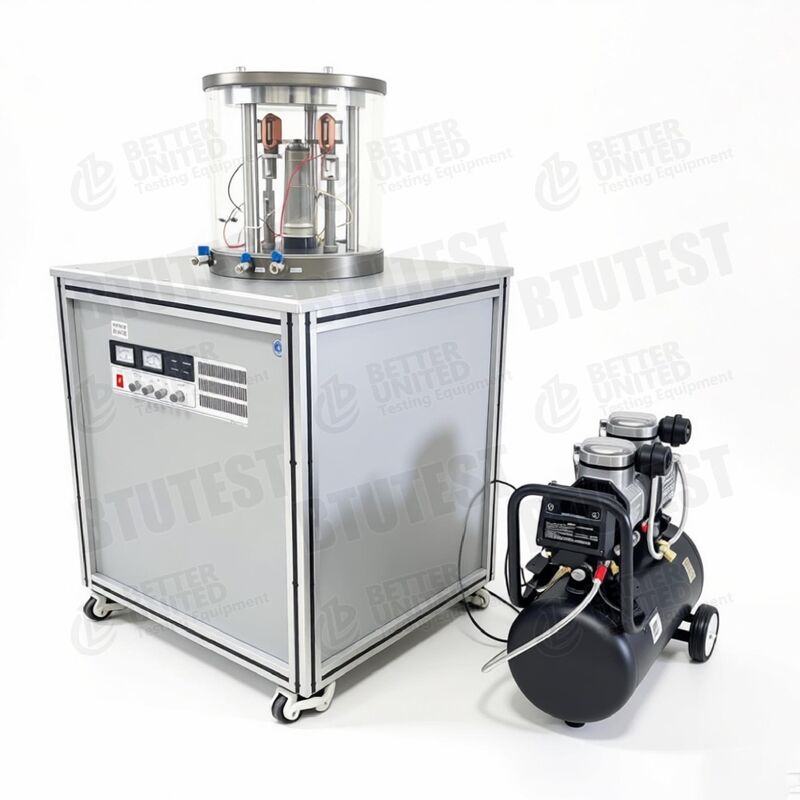
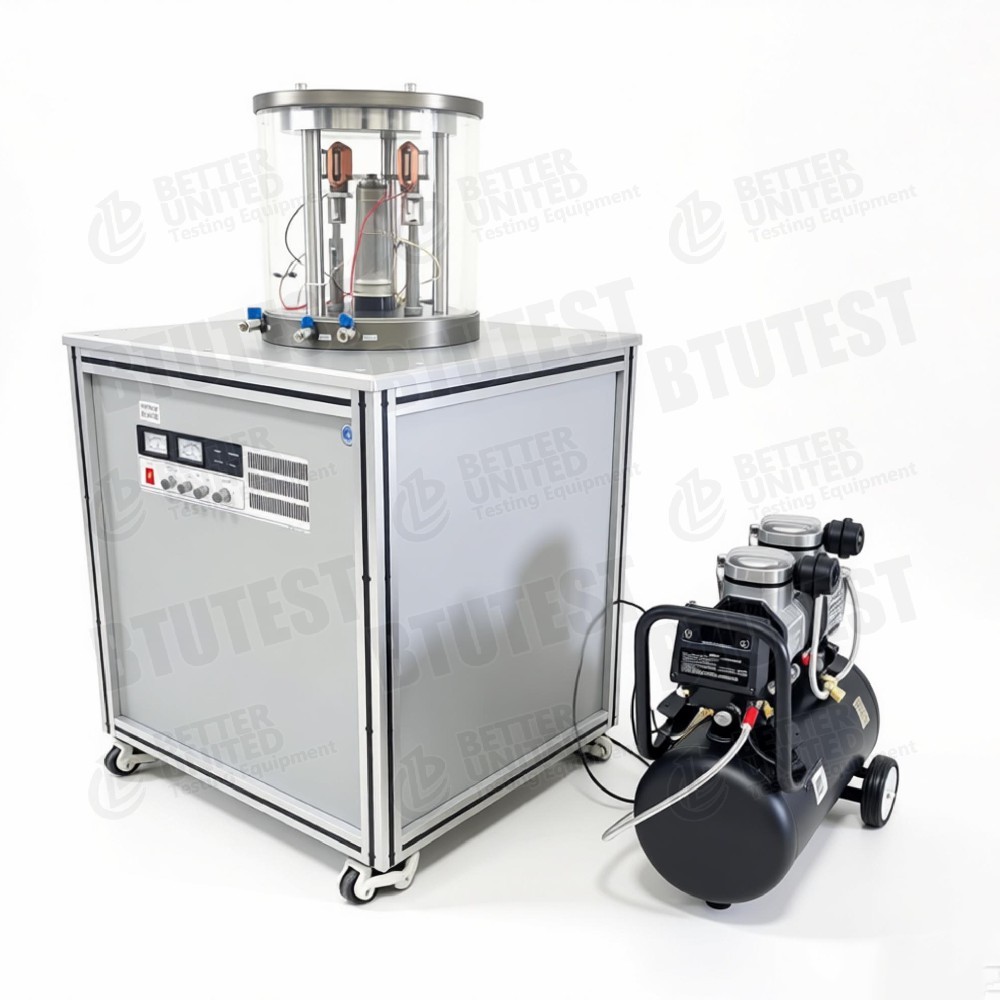
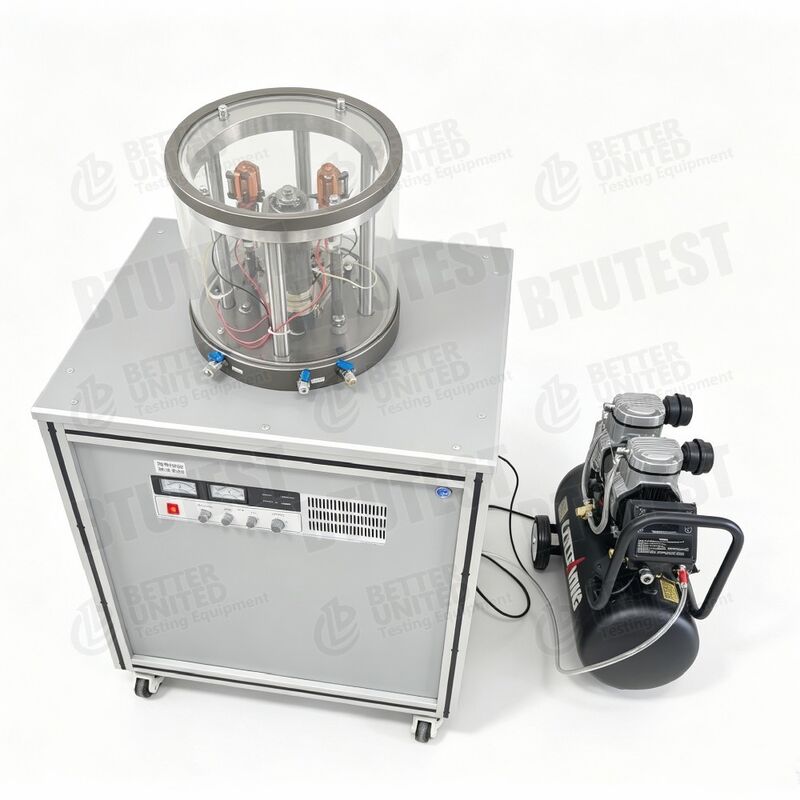
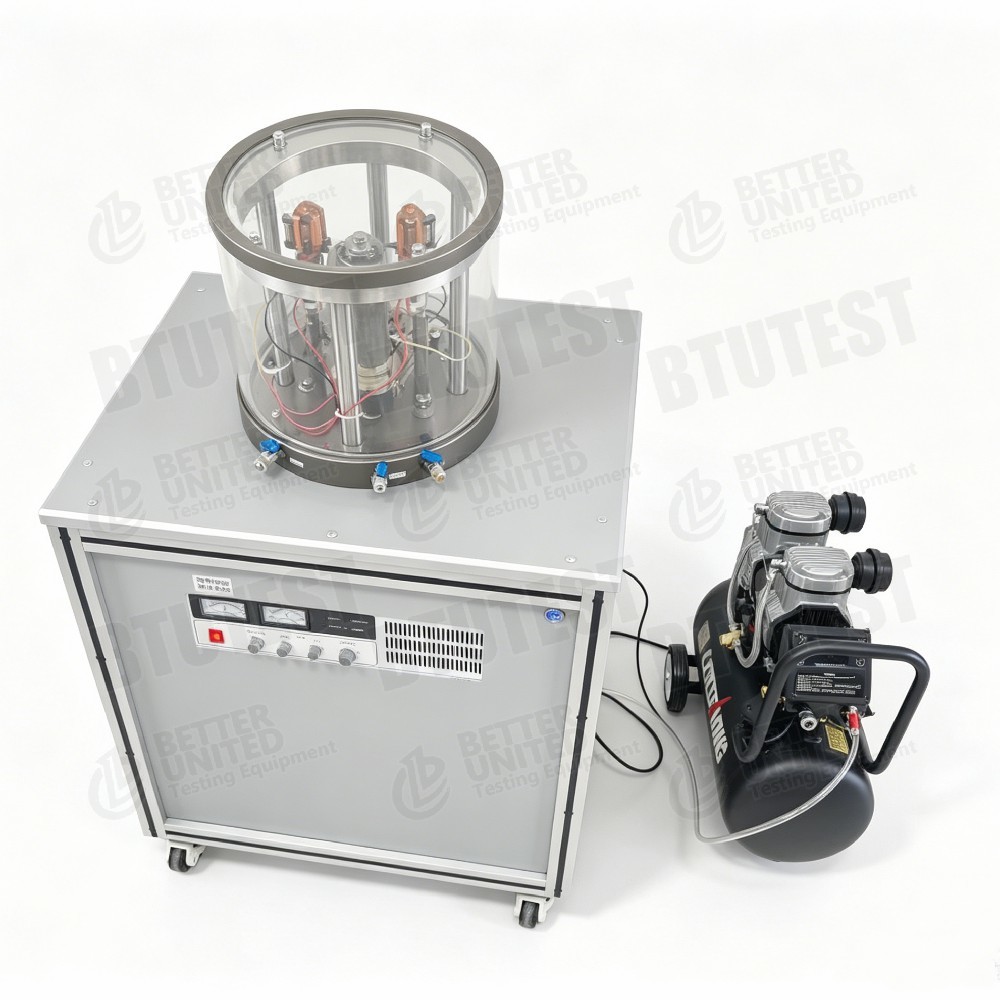
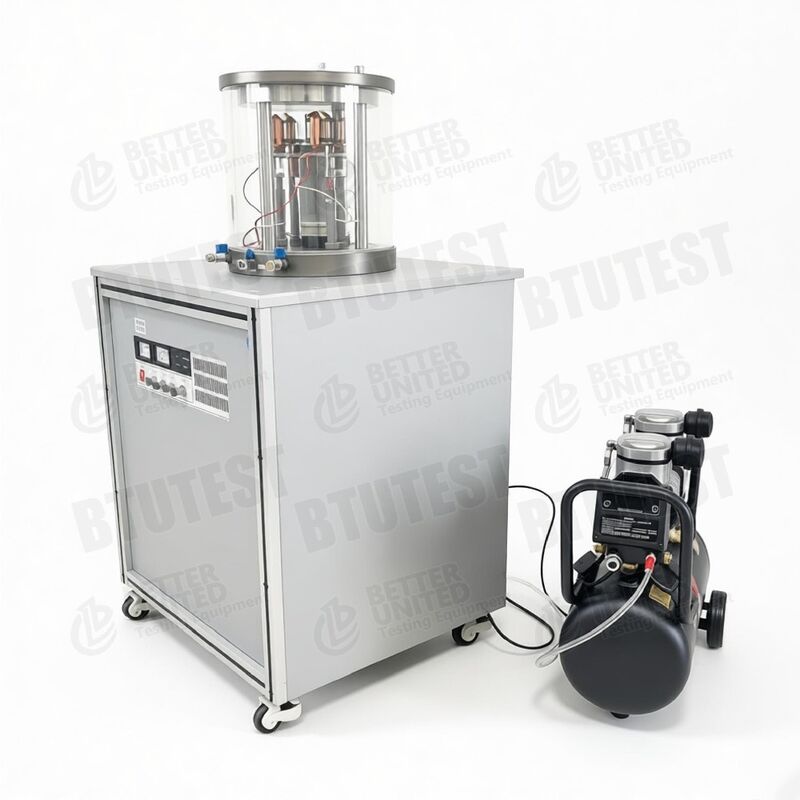
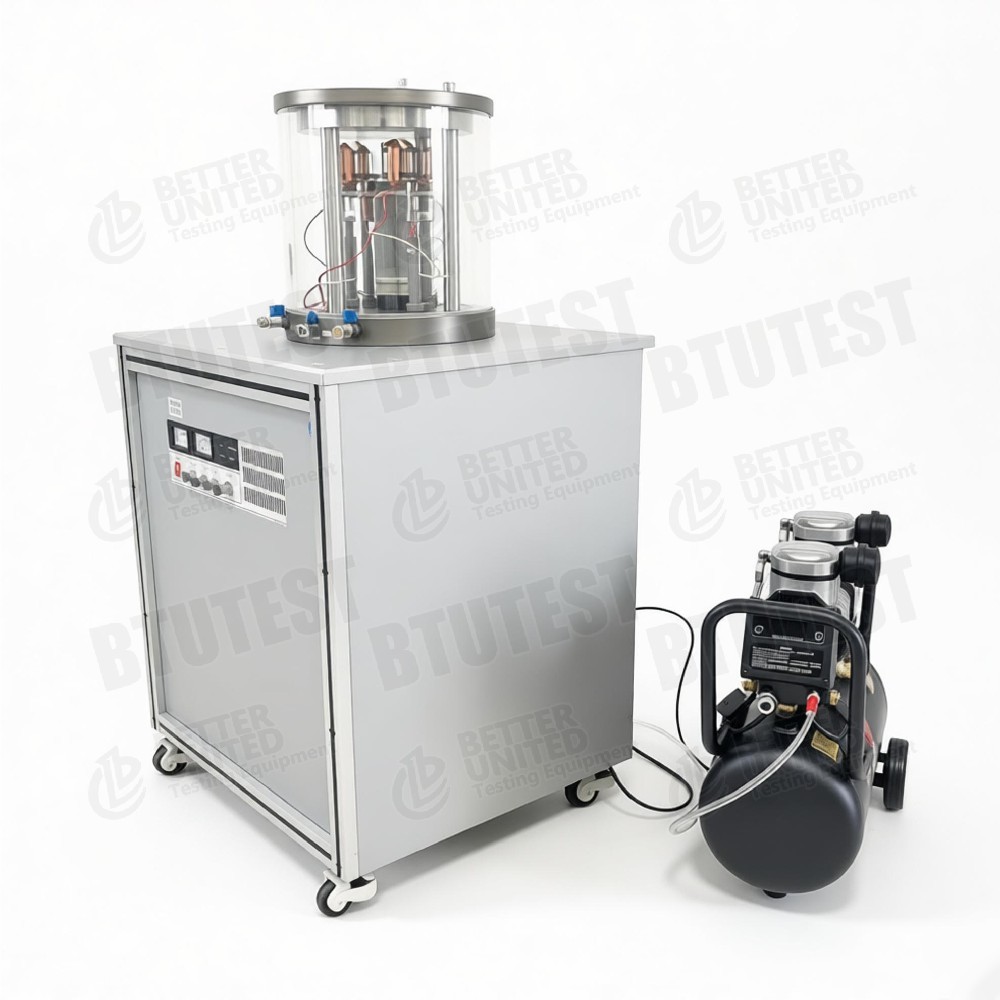
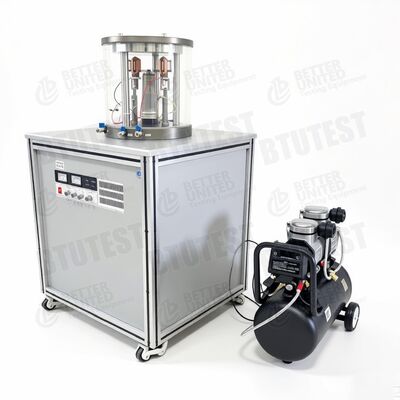
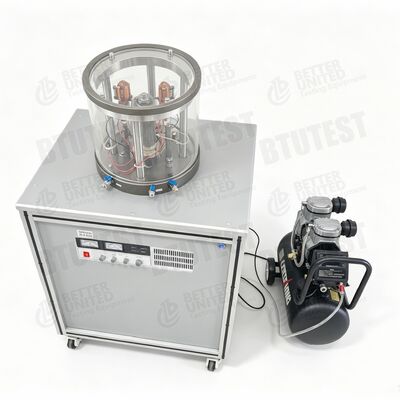
The BTU-RCA-1 is a resonant column testing system that applies cyclic torsional force to a soil specimen to measure the dynamic elastic modulus, shear modulus, and damping ratio of soil under small strain conditions (10⁻⁶ ~ 10⁻⁴). The system uses electromagnetic excitation and is fully computer-controlled for cell pressure and dynamic torque. It can perform conventional triaxial consolidation of saturated soils as well as resonant column tests.
2. Test Standards
Based on general resonant column test specifications, the system meets the following standards:
• ASTM D4015(Standard Test Method for Shear Modulus and Damping Ratio by Resonant Column Method)
• ASTM D3999(Test Method for Dynamic Properties of Soil under Cyclic Loading)
• JG/T 120-2007(Chinese Construction Industry Standard – Resonant Column Apparatus)
• BS EN ISO 17892-9(Geotechnical laboratory testing – Cyclic triaxial and resonant column)
3. Specification
| Parameter | Specification |
| Maximum pressure chamber rating | 1.5 MPa |
| Cell pressure control range | 0 ~ 0.9 MPa |
| Cell pressure loading method | Pneumatic loading, servo proportional valve control |
| Cell pressure accuracy | ±0.1% F.S. |
| Soil specimen sizes | Φ39.1 mm or Φ50 mm |
| Excitation type | Electromagnetic (4 high-voltage, high-magnetic excitation coil sets) |
| Maximum vibration frequency | 300 Hz |
| Strain range | 10⁻⁶ ~ 10⁻⁴ |
| Accelerometer | Built-in fixed, balanced accelerometer |
| Included components | Voltage generator, drive amplifier, 24-bit / 10 kHz high-frequency data acquisition unit, calibration bar and calibration weights |
| Control mode | Fully computer-controlled (cell pressure + dynamic torque) |
4. Detail
• Pressure chamber: Maximum pressure 1.5 MPa, suitable for medium-to-low pressure triaxial consolidation and resonant column tests of saturated soils.
• Cell pressure control: Pneumatic loading with a high-precision servo proportional valve enables automatic regulation from 0 to 0.9 MPa, accuracy ±0.1% F.S.
• Excitation system: Electromagnetic torsional excitation with 4 coil sets, generating high magnetic field and high voltage drive for wide frequency range (up to 300 Hz).
• Sensor: Built-in balanced accelerometer (fixed), eliminating external attachment and improving repeatability and noise immunity.
• Data acquisition: 24-bit resolution, 10 kHz sampling rate – suitable for capturing small-strain dynamic responses.
• Calibration accessories: Supplied with a calibration bar and weights for periodic verification of shear modulus measurements.
• Specimen sizes: Compatible with two standard diameters (39.1 mm and 50 mm) for common soil types.
5. Application
• Small-strain dynamic parameter determination: Measures shear modulus (G) and damping ratio (D) in the strain range 10⁻⁶ ~ 10⁻⁴ for site seismic response analysis.
• Foundation dynamic property evaluation: Provides dynamic soil parameters for vibration design of piles, machine foundations, traffic loads, etc.
• Constitutive model validation: Obtains small-strain stiffness decay curves for calibrating advanced constitutive models.
• Combined triaxial consolidation + resonant column tests: First perform triaxial consolidation, then apply torsional vibration to study the effect of consolidation stress on dynamic properties.
• Research and teaching: Suitable for laboratory studies and demonstrations in geotechnical earthquake engineering and soil dynamics.
6. Advantages
• Fully automatic control: Cell pressure application, dynamic excitation, and data acquisition are computer-controlled, reducing operator error.
• High precision at small strain: Strain range down to 10⁻⁶ accurately captures the maximum shear modulus (Gmax) of soil.
• High frequency response: Maximum vibration frequency 300 Hz covers common resonant column testing bands.
• Built-in accelerometer: Minimizes installation disturbance and improves test repeatability.
• Four electromagnetic coils: Provide sufficient and uniform excitation torque, ensuring a pure torsional mode.
• 24‑bit DAQ: High resolution and sampling rate for processing weak dynamic signals.
• Standardized calibration: Comes with calibration bar/weights, ensuring traceable measurements.
7. Parameter (At-a-Glance Table)
8. What To Choose
| Parameter | Value / Specification |
| Pressure chamber rating | 1.5 MPa |
| Cell pressure range | 0 ~ 0.9 MPa |
| Cell pressure accuracy | ±0.1% F.S. |
| Soil specimen diameters | 39.1 mm / 50 mm |
| Excitation method | Electromagnetic (4 coils) |
| Maximum frequency | 300 Hz |
| Strain range | 10⁻⁶ ~ 10⁻⁴ |
| Accelerometer | Built-in balanced |
| DAQ | 24-bit / 10 kHz |
| Included items | Voltage generator, drive amplifier, calibration bar, calibration weights |
The BTU-RCA-1 is a single-model resonant column system, so inter-model selection is not needed. However, consider the following factors to see if it fits your requirements:
| Consideration | Suggestion |
| Required cell pressure ≤0.9 MPa | Suitable for conventional soils (non-deep, non-ultra-high stress). For higher cell pressures (e.g., >2 MPa), a high-pressure resonant column is needed. |
| Specimen size match | Only supports 39.1 mm and 50 mm diameters – suitable for fine-grained to medium sand. Larger particles require a large-size resonant column. |
| Frequency requirement | Maximum 300 Hz meets most small-strain resonant tests. For higher frequencies (e.g., 500 Hz+), a different model may be needed. |
| Need for triaxial consolidation | The system supports conventional triaxial consolidation, suitable for saturated soil testing after consolidation – ideal for most soil dynamics labs. |
| Budget and automation level | Fully automatic, includes DAQ, amplifier, and complete components. Cost-effective for laboratories requiring standardized, efficient testing. |
If you need only simple small-strain modulus testing with low cell pressure, the RCA‑1 is a cost-effective choice. For unsaturated soil testing or an extremely wide frequency range, contact the manufacturer for extended configurations.
9. Process Flow
Below is a standardized procedure for a typical resonant column test (consolidation followed by torsional resonance) using the BTU-RCA-1:
Step 1: Specimen preparation and installation
• Prepare an undisturbed or remolded saturated soil specimen according to the required size (39.1 mm or 50 mm diameter).
• Install the specimen in the triaxial pressure chamber; connect the pore pressure sensor and drainage lines.
• Mount the top excitation unit (electromagnetic coil sets are pre-installed).
Step 2: System filling and saturation
• Fill the chamber and lines with de-aired water, removing air bubbles.
• The software automatically performs back pressure saturation and measures the B‑value (B≥0.95 indicates full saturation).
Step 3: Triaxial consolidation
• Set the target cell pressure (0~0.9 MPa) and consolidation time / drainage stability criteria.
• The software automatically applies cell pressure and records volume change / pore pressure dissipation, completing isotropic or anisotropic consolidation.
Step 4: Resonant column test preparation
• After consolidation, close the drainage valve to maintain undrained conditions.
• The software automatically identifies specimen geometry and performs accelerometer zeroing and system self‑check.
Step 5: Excitation and frequency sweep
• Set the excitation voltage (output by the drive amplifier) and the frequency sweep range (e.g., 10~300 Hz).
• The electromagnetic coils apply cyclic torsional force; the accelerometer monitors the response.
• The software automatically sweeps the frequency and identifies the resonant frequency (frequency corresponding to the peak acceleration response).
Step 6: Calculate shear modulus and damping ratio
• From the resonant frequency, specimen dimensions, moment of inertia, etc., the software calculates the shear modulus G at the current cell pressure.
• The damping ratio D is calculated using the half‑power bandwidth method from the resonance peak.
• Measurements can be repeated at different strain levels (by changing the excitation force) to obtain G‑γ and D‑γ decay curves.
Step 7: Change cell pressure or strain level
• If needed, unload the cell pressure or change to a different cell pressure and repeat Steps 4‑6 to obtain dynamic parameters under different stress conditions.
Step 8: Test termination and data processing
• The software automatically saves all sweep curves, resonant frequencies, G and D values.
• The post‑processing module generates a test report including Gmax, damping ratio versus strain or cell pressure charts.
Step 9: Cleaning and maintenance
• Unload the cell pressure, drain the pressure chamber, and remove the specimen.
• Clean the lines and pressure chamber; inspect the sensors and coils.
Note: The BTU-RCA‑1 software provides a wizard‑driven interface; most steps can be run automatically with one‑click operation.
If you need a quotation, standard configuration list, or comparison with other resonant column systems, please provide more information.
Enter Your Message

Try our best,make things better. People first,Innovative Productivity,Common Solutions
| Hebei Better United Import And Export Co., Ltd. |
| Hejie Town,Xianxian County,Cangzhou City,Hebei Province,China |
| 86-151-2879-5929 |
| sales@btutest.com |