
logo
Send Message
Hebei Better United Import And Export Co., Ltd.

Automatic Rock Soil Triaxial System

Product Details:
Place of Origin: Made in China
Brand Name: BTUTEST
Certification: SGS, INTERTEK
Model Number: BTU-TTS-20
Payment & Shipping Terms:
Minimum Order Quantity: 1 set
Price: Negotiable
Packaging Details: Soil Testing Equipment Standard export wooden box
Delivery Time: 6 days after payment
Payment Terms: L/C, D/A, D/P, T/T, Western Union
Supply Ability: 100 sets per month
  • Detail Information
  • Product Description

Detail Information

Name: Automatic Rock Soil Triaxial System Warranty: 1 Year
Max. Axial Force: 200 kN Loading Rate: 0.00001~9.99999 mm/min (stepless)
Axial Control Mode: Strain Control (stress Control Optional) Triaxial Cell Pressure: 3 MPa

Product Description

Model BTU-TTS-20 Fully Automatic Triaxial Apparatus

Description

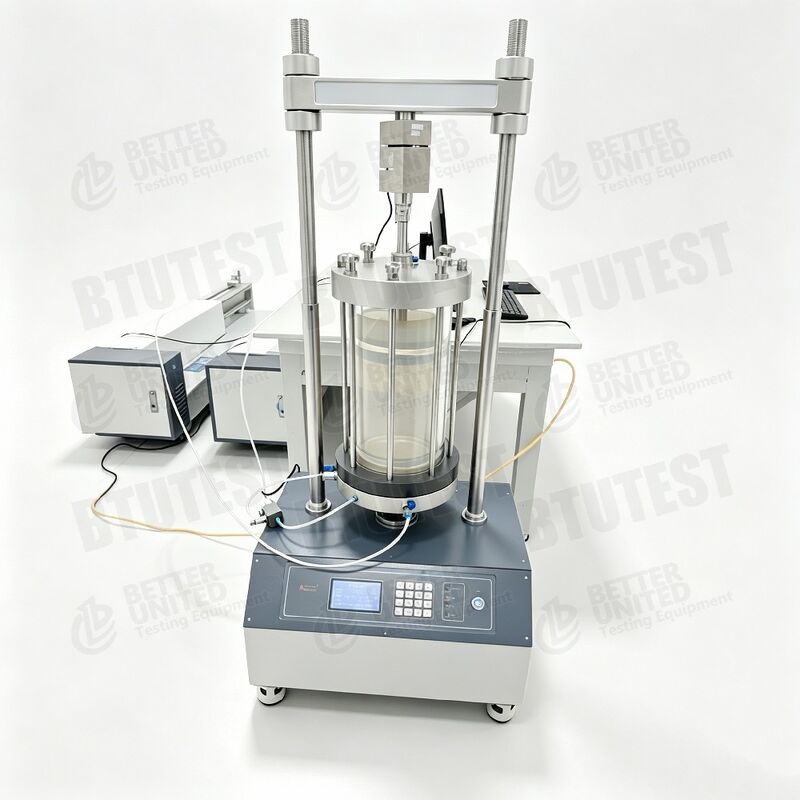
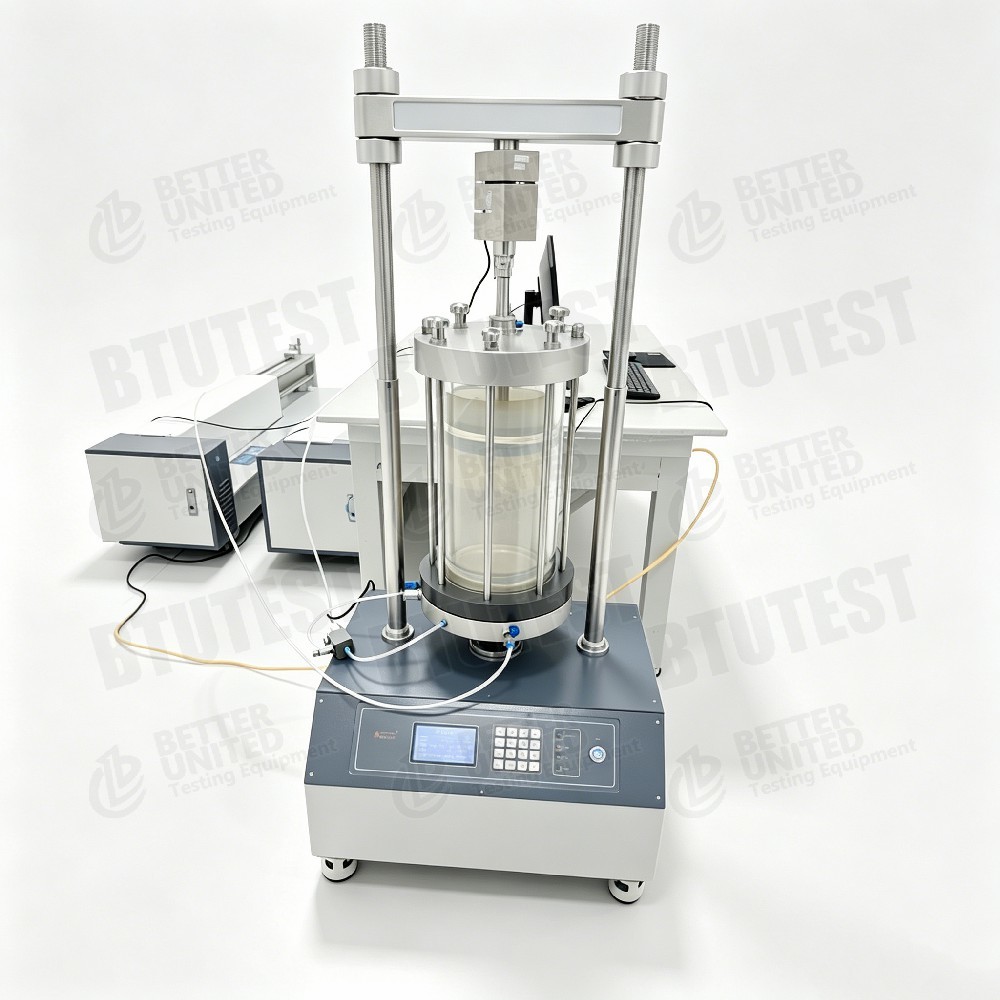
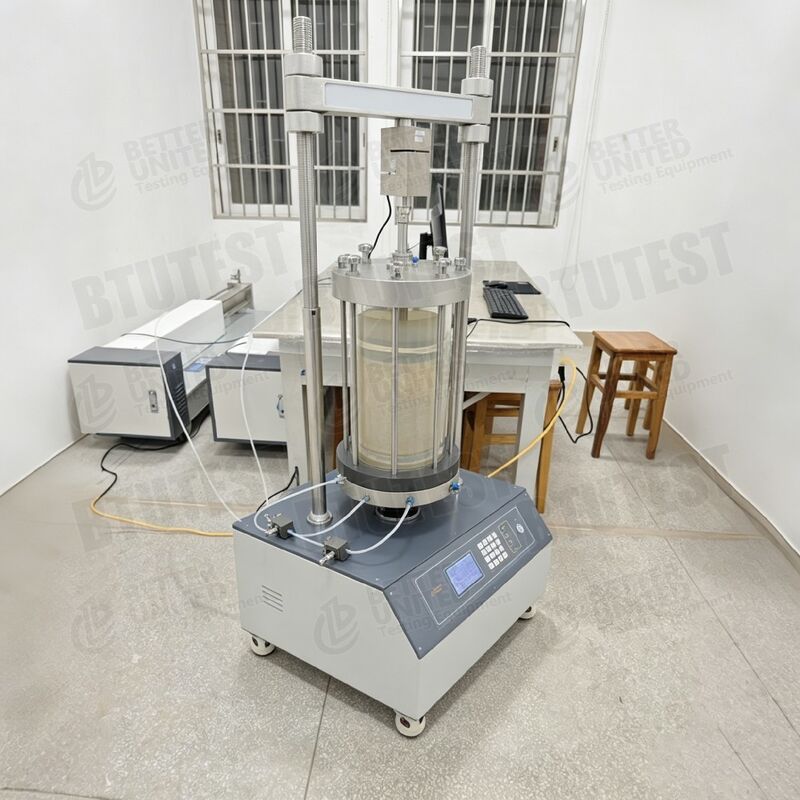
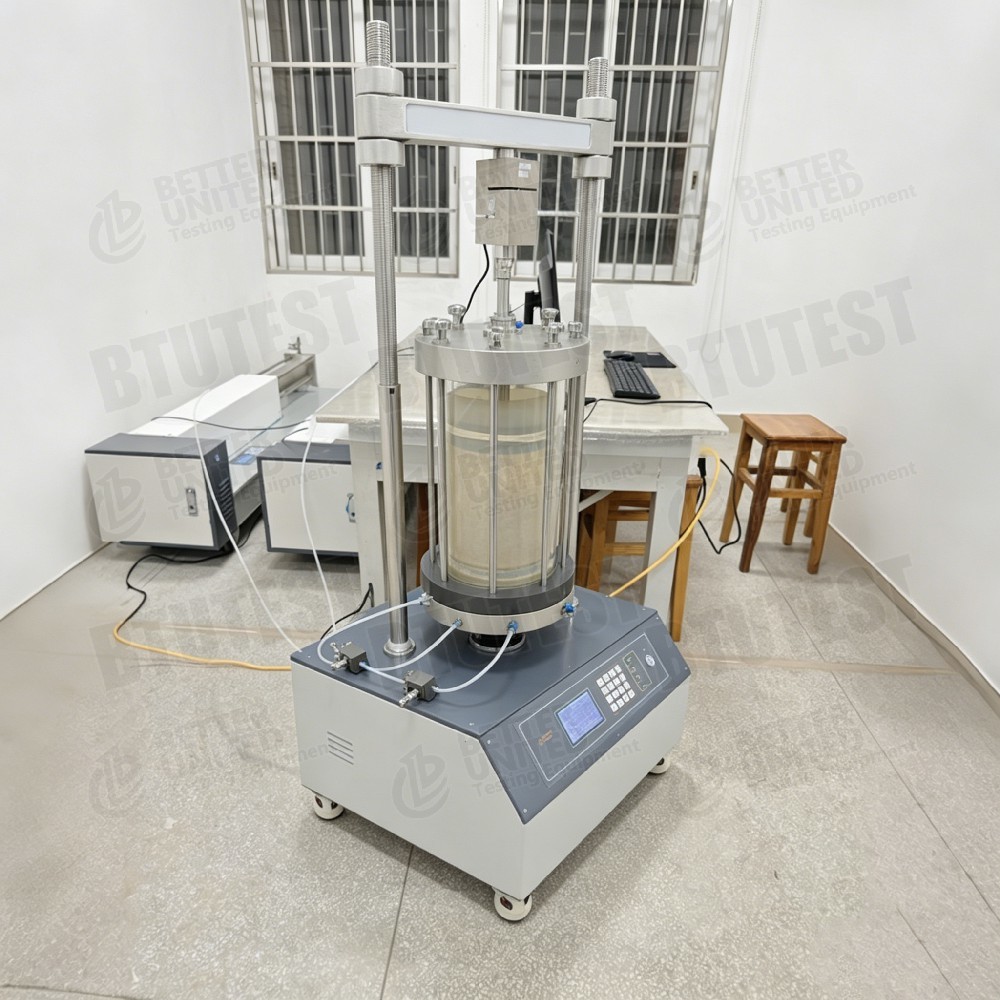
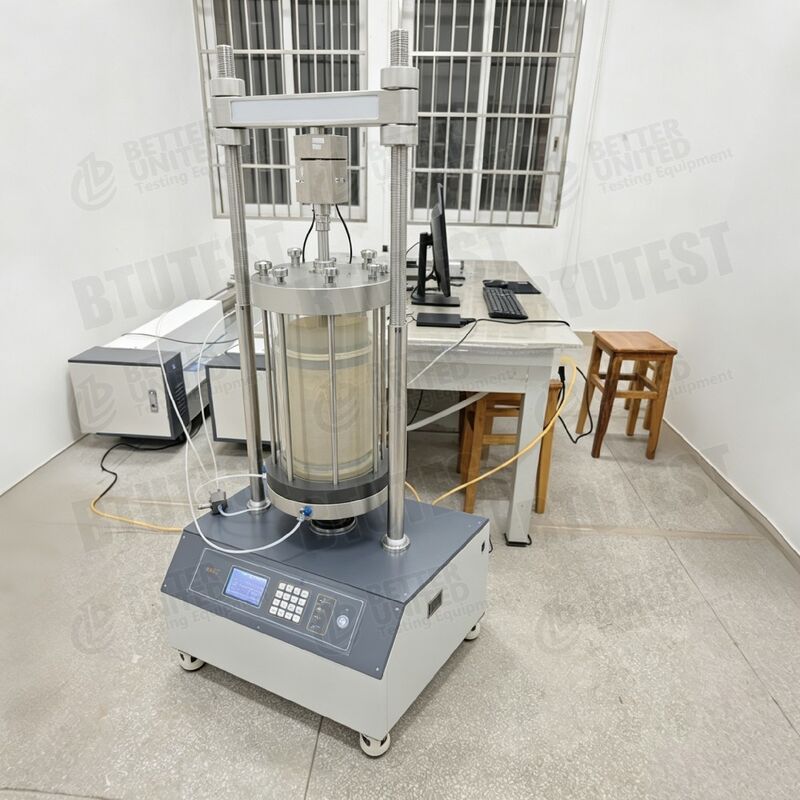
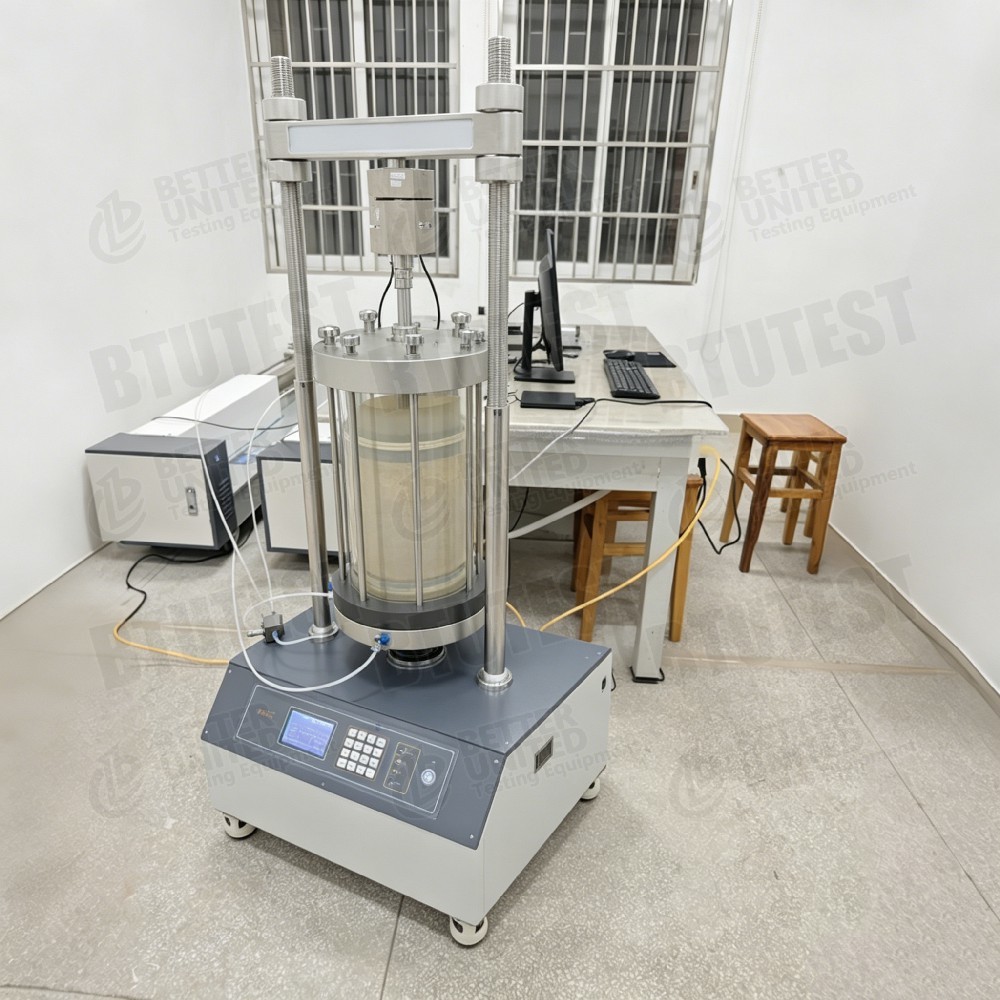
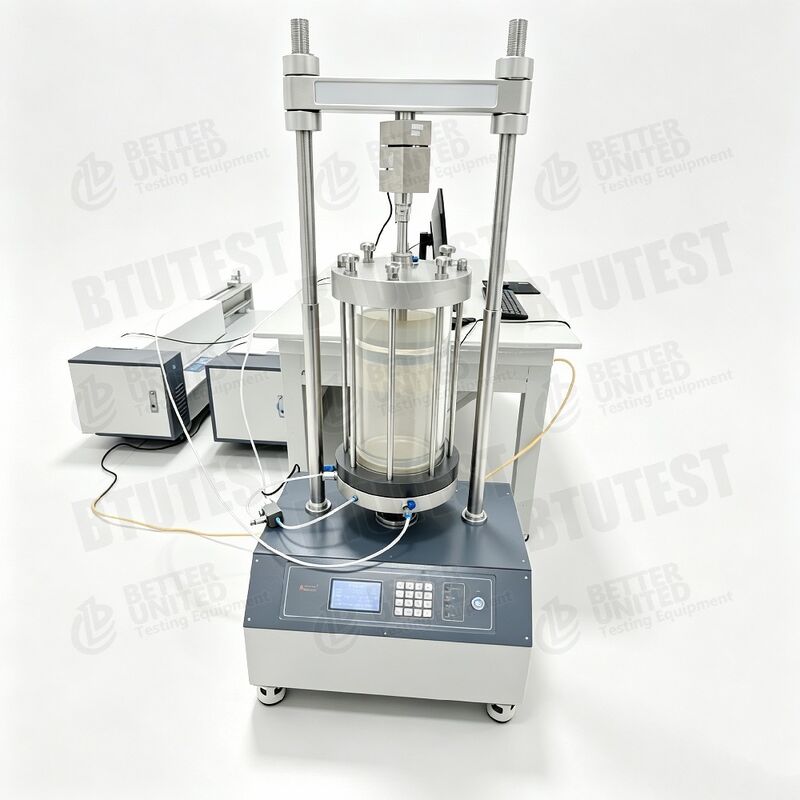
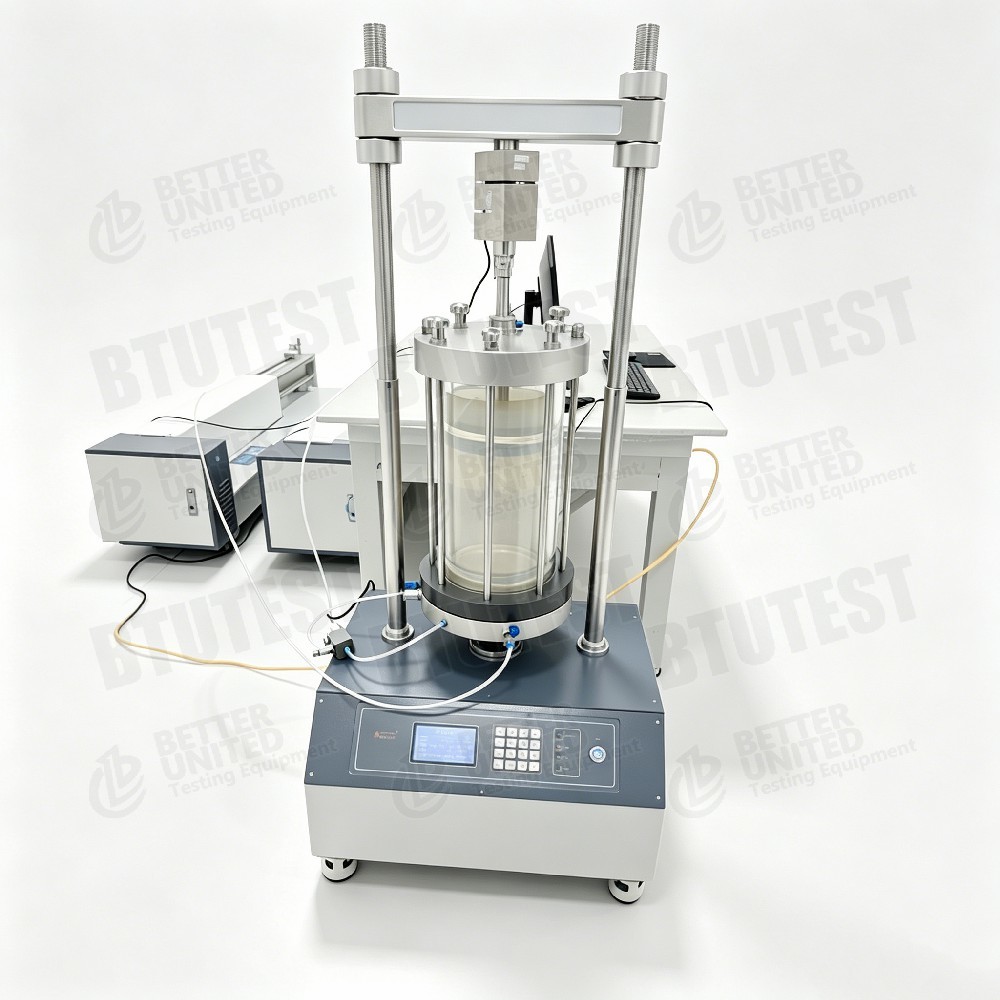
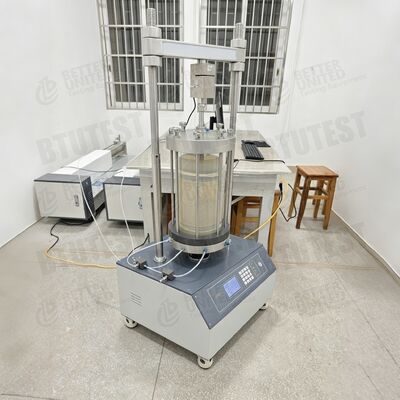
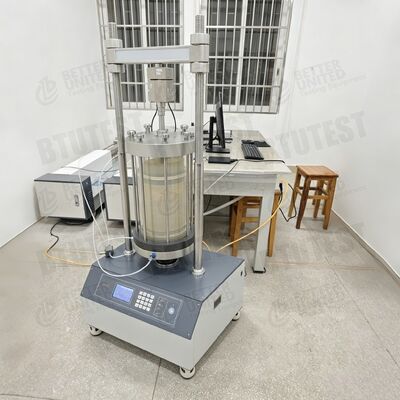
This equipment is a fully automatic rock/soil triaxial testing system, modelBTU-TTS-20, designed for large‑size specimens (Ø200 mm × H400 mm).
Main components and features:

  • Two‑column load frame– Servo motor driven screw, maximum axial force 200 kN, loading rate 0.00001~9.99999 mm/min (stepless adjustment). The frame integrates a 4‑channel data acquisition unit, a 16‑key membrane keypad, and LED status indicators.
  • Triaxial cell– Maximum working pressure 3 MPa, transparent organic glass side wall, specimen size Ø200×400 mm.
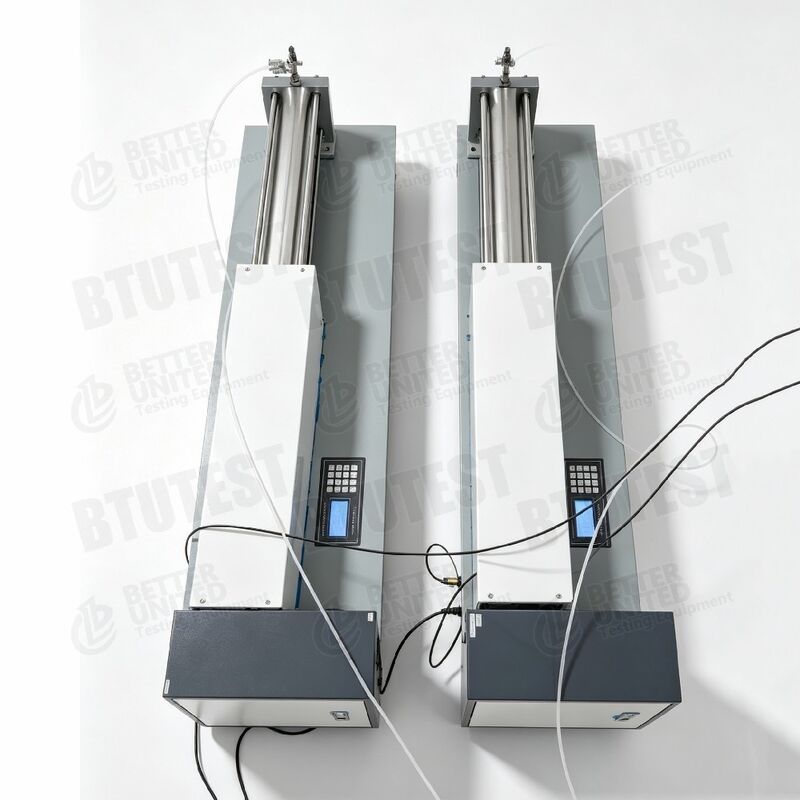
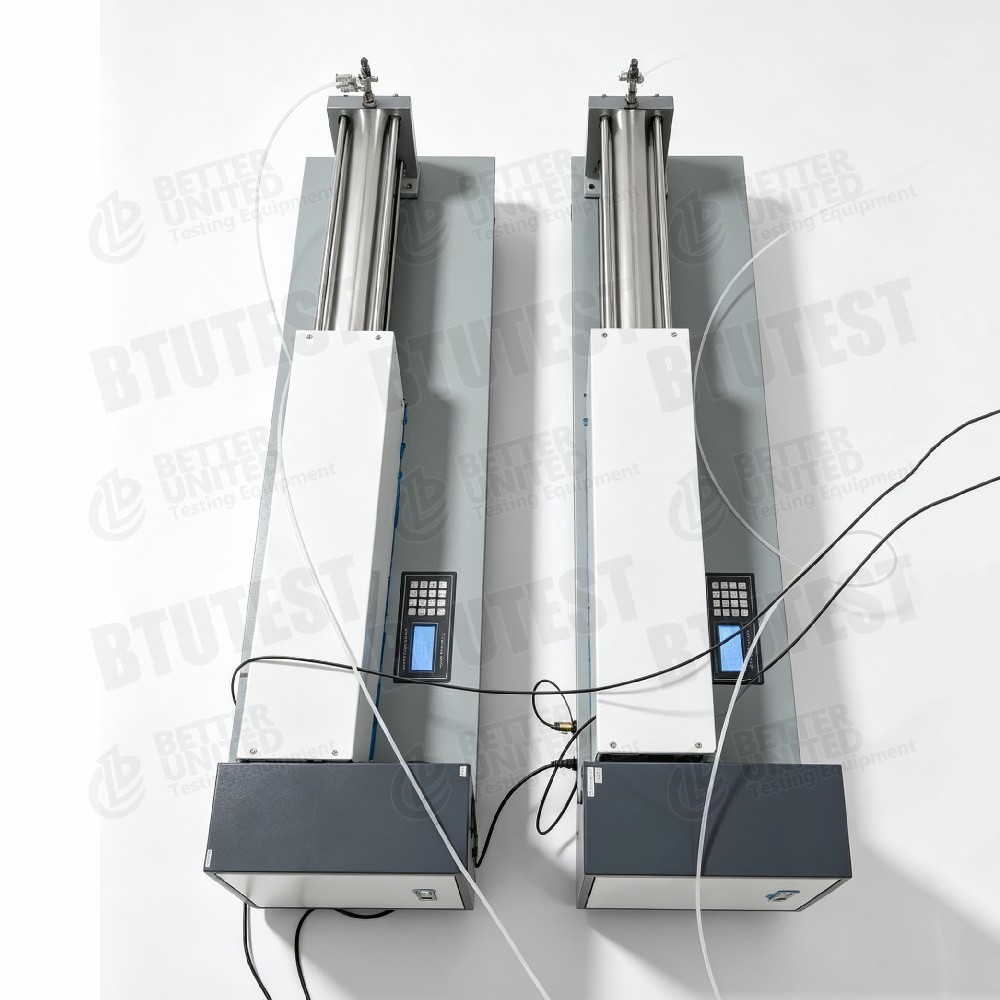
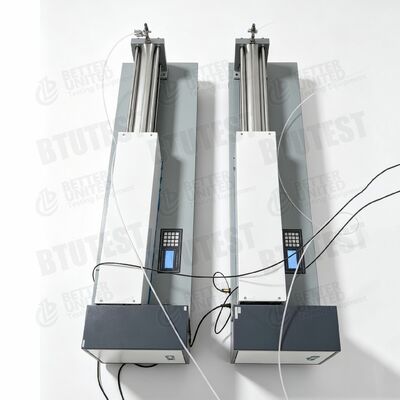
  • Confining pressure / back pressure volume controllers– Each 0~3 MPa, resolution 1 kPa, accuracy ±0.1% FS, volume range 0~3000 ml, USB interface, over‑pressure and over‑volume protection.
  • Volume change / drainage measurement– Range 0~3000 ml, resolution 0.001 ml, accuracy ±0.03 ml.
  • Pore pressure sensor– Range 7 MPa (the document has a minor inconsistency; 7 MPa is taken as correct), accuracy ±0.1% FS.
  • Software– Fully automatic triaxial testing software V3.11 (English version), supports Windows-10/11; includes modules for data acquisition, B‑value check, back pressure saturation, isotropic/anisotropic consolidation, UU, CU (with pore pressure), CD (with volume change), sensor calibration, and post‑processing (Mohr circle, c, φ).
  • Configuration also includes specimen preparation accessories and an automatic water supply system.


Test Standards (International)

No specific standards are listed in the document. Based on the functions (rock/soil triaxial compression, consolidation, drained/undrained testing, pore pressure measurement), the following international standards may be referenced (confirm with the manufacturer):

  • ASTM D7012(Triaxial compressive strength of rock)
  • ASTM D7181(Consolidated undrained triaxial test for soil)
  • ASTM D4767(Consolidated drained triaxial test for soil)
  • ASTM D2850(Unconsolidated undrained triaxial test for soil)
  • ASTM D2166(Unconfined compressive strength)
  • ASTM D5084(Permeability, if equipped)
  • ISRM suggested methods(Rock triaxial testing)
  • ISO 17892‑8/-9(Geotechnical triaxial tests)

For large‑diameter rock cores (Ø200 mm),ASTM D2664(Triaxial strength of rock) is also relevant.


Detail

  • Large specimen capacity– Ø200×400 mm allows testing of coarse‑grained soils, soft rock, or破碎 rock, reducing scale effects.
  • High‑precision volume measurement– 0.001 ml resolution and ±0.03 ml accuracy, suitable for high‑precision consolidation and permeability tests.
  • Dual controllers– Separate confining and back pressure controllers, each 3000 ml volume, enabling long‑duration tests or multistage loading.
  • Integrated load frame design– Built‑in acquisition and control keypad, eliminating external controllers and reducing cable clutter and space.
  • Comprehensive software functions
    • B‑value check, back pressure saturation
    • Isotropic / anisotropic consolidation
    • UU, CU (pore pressure), CD (volume change)
    • Automatic Mohr circle plotting, calculation of cohesion (c) and friction angle (φ)
    • Dual‑Y‑axis graphics, up to 3 simultaneous windows
    • Data zoom, copy, save, print
  • Automatic protection– Over‑pressure and over‑volume shutdown.


Specification

Parameter Specification
Model BTU-TTS-20
Max. axial force 200 kN
Loading rate 0.00001~9.99999 mm/min (stepless)
Axial control mode Strain control (stress control optional)
Triaxial cell pressure 3 MPa
Cell wall material Transparent organic glass
Specimen size Ø200 mm × H400 mm
Confining / back pressure controller 0~3 MPa, resolution 1 kPa, accuracy ±0.1% FS
Volume range (confining/back/volume change/drainage) 0~3000 ml
Volume change / drainage resolution 0.001 ml
Volume change / drainage accuracy ±0.03 ml
Pore pressure range 7 MPa
Pore pressure accuracy ±0.1% FS, resolution 1 kPa
Software English version V3.11, modular, supports Windows-10/11
Control panel Built‑in 16‑key membrane keypad (non‑external)
Acquisition channels Built‑in 4 channels
Status indication 4 LED lights
Automatic water supply Included
 
 
Application
  • Rock mechanics– Triaxial compressive strength, deformation modulus, Poisson’s ratio, strength parameters (c, φ).
  • Soil mechanics– Triaxial consolidated drained/undrained tests on coarse‑grained soils, rockfill, weathered rock.
  • Large‑scale engineering– High dams, foundations, slopes, tunnel surrounding rock – large‑size specimen testing.
  • Tailings dams– Mechanical properties and liquefaction assessment of tailings sand (if dynamic module is added).
  • Energy geotechnics– Gas hydrate reservoirs, geothermal reservoir rock – triaxial behaviour.
  • Teaching and research– Rock/soil mechanics laboratories in universities and research institutes.


Advantages

  • Large specimen capacity– Ø200×400 mm represents coarse‑grained materials better, matching actual engineering gradations.
  • High‑precision volume control– 0.001 ml resolution over 3000 ml range, ideal for high‑accuracy volume change measurement.
  • Integrated load frame– Compact design with built‑in acquisition and control, fewer external devices.
  • Wide loading rate range– 0.00001~9.99999 mm/min, suitable for both creep (very slow) and fast shearing.
  • Independent dual controllers– Separate confining and back pressure control, enabling complex stress paths (e.g., anisotropic consolidation).
  • User‑friendly software– English interface, modular combination, automatic Mohr circle and report generation, supports Windows- 10/11.
  • Safety protection– Automatic stop on over‑pressure/over‑load.
  • Expandability– Optional stress control, temperature control, dynamic loading modules.


What To Choose

Select configuration based on requirements:

  • Specimen size– For conventional cores (Ø50–100 mm), choose a smaller cell model. For Ø200 mm large specimens, BTU-TTS-20 is necessary.
  • Maximum axial force– Soft rock or soil: 50–100 kN may suffice; hard rock or rockfill: 200 kN is more appropriate.
  • Confining pressure range– 3 MPa is sufficient for most geotechnical tests; deep rock requires higher confining pressure (e.g., 30 MPa) – choose another model.
  • Need for stress control– Basic software is strain‑controlled. For stress‑path tests (e.g., k₀ consolidation, creep), add the stress control option.
  • Temperature control– For frozen soil or high‑temperature rock, inquire about temperature control upgrade.
  • Budget– Large‑size systems are more expensive. If such large specimens are not needed, choose smaller models (e.g., Ø100 mm or Ø61.8 mm) to reduce cost.


Process Flow

Example: Rock triaxial compression test (drained / CD‑type)


  • Specimen preparation– Drill or cut Ø200×400 mm rock core; grind ends flat and smooth; measure dimensions and weight.
  • Specimen installation– Place specimen on triaxial cell pedestal; apply heat‑shrink tube or rubber membrane; install axial LVDT and circumferential strain gauges (if required). Seal the cell; connect confining and back pressure lines.
  • Saturation (if required)– Apply back pressure (e.g., 0.5 MPa) using the back pressure controller; perform CO₂ flushing or de‑aired water saturation until B‑value ≥0.95.
  • Consolidation– Apply target confining pressure (e.g., 2 MPa). For isotropic consolidation, keep confining pressure constant; for anisotropic consolidation, also apply axial deviator stress. Record volume change (via drainage line or volume controller) until stable.
  • Shearing– Select strain‑controlled mode; set shear rate (e.g., 0.1 mm/min). Software automatically records axial load, displacement, confining pressure, pore pressure (if undrained), and volume change (if drained). Real‑time stress‑strain curve display.
  • End of test– Stop loading when axial strain reaches a preset value (e.g., 15%) or load drops to 70% of peak. Unload confining pressure, disassemble specimen, photograph failure mode.
  • Data processing– Software automatically calculates peak strength, elastic modulus (E), Poisson’s ratio (ν) for each confining pressure. Using data from at least three confining pressures, the software draws Mohr circles and calculates c and φ. Generates test report (exportable to Excel or Word).
  • Cleanup– Clean the triaxial cell and lines; replenish de‑aired water.

Note for soil tests: For CU tests on saturated soft soil, pore pressure must be recorded during shearing. For CD tests, open the drainage valve to measure volume change. The software modules include these options.

Summary:The BTU-TTS-20 is a fully automatic triaxial testing system for large‑size geotechnical specimens, offering high precision. It is suitable for rock and soil mechanics studies requiring field gradation representation or testing of large particles.

Get in touch with us

Enter Your Message

You Might Be Into These