







|
Product Details:
|
|
| Place of Origin: | Made in China |
|---|---|
| Brand Name: | BTUTEST |
| Certification: | SGS, INTERTEK |
| Model Number: | BTU‑DDS‑4 / BTU‑DDS‑4A / BTU‑DDS‑4Q |
|
Payment & Shipping Terms:
|
|
| Minimum Order Quantity: | 1 set |
| Price: | Negotiable |
| Packaging Details: | Soil Testing Equipment Standard export wooden box |
| Delivery Time: | 6 days after payment |
| Payment Terms: | L/C, D/A, D/P, T/T, Western Union |
| Supply Ability: | 100 sets per month |
|
Detail Information |
|||
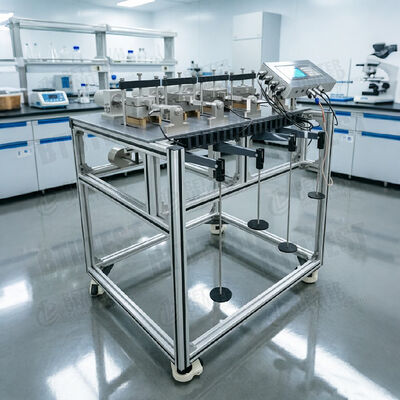
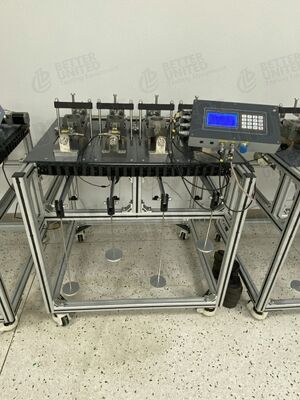
| Name: | Four‑Unit Direct Shear Apparatus | Warranty: | 1 Year |
|---|---|---|---|
| Specimen Size (mm): | Φ61.8×H20 | Max. Shear Displacement: | 8 Mm |
| Sensors: | 4 Load Cells | Control Method: | 16‑key Membrane Keypad + 240×128 LCD |
Product Description
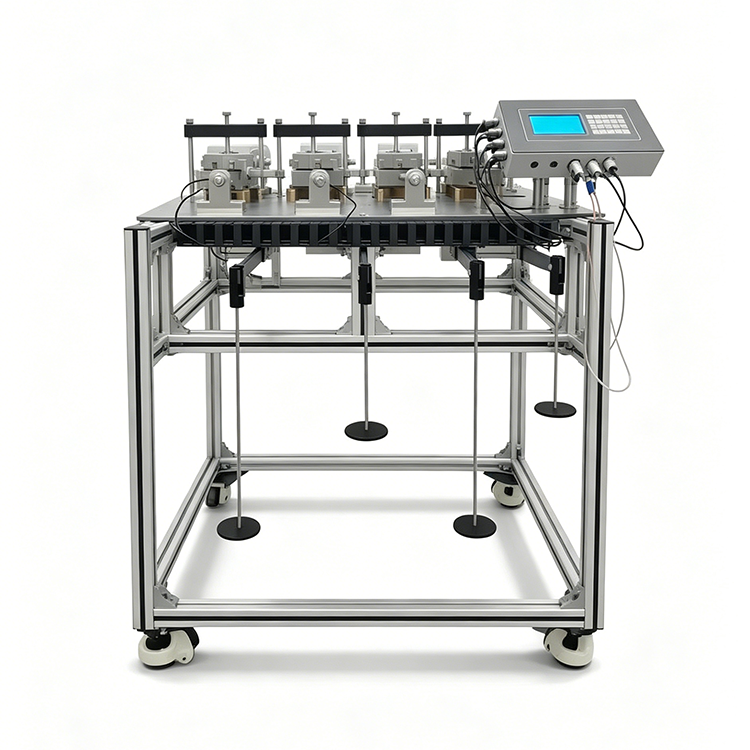
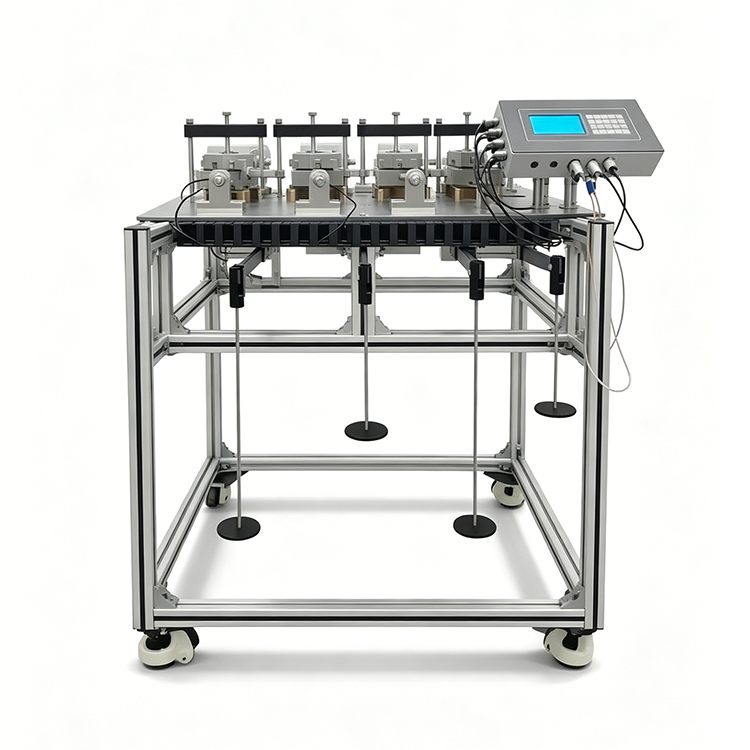
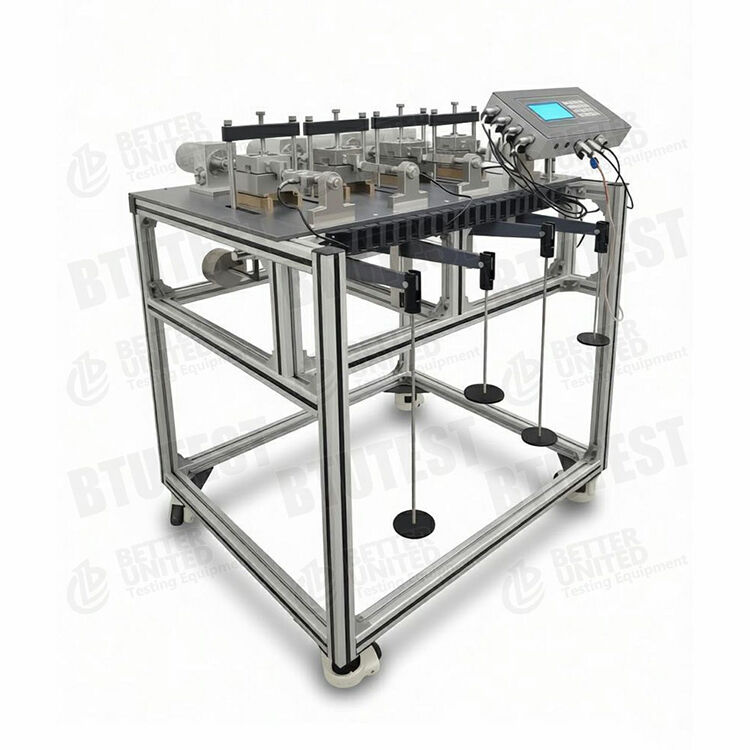
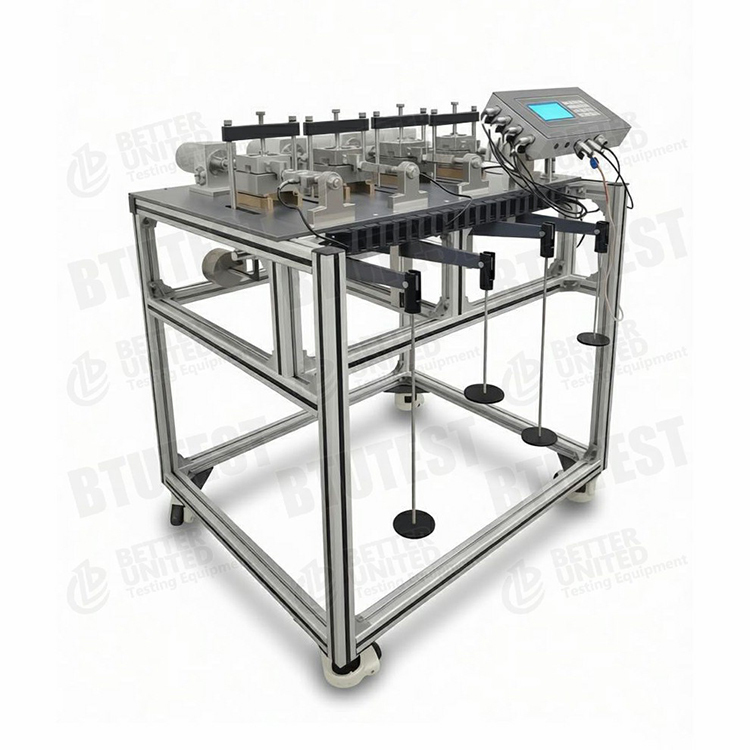
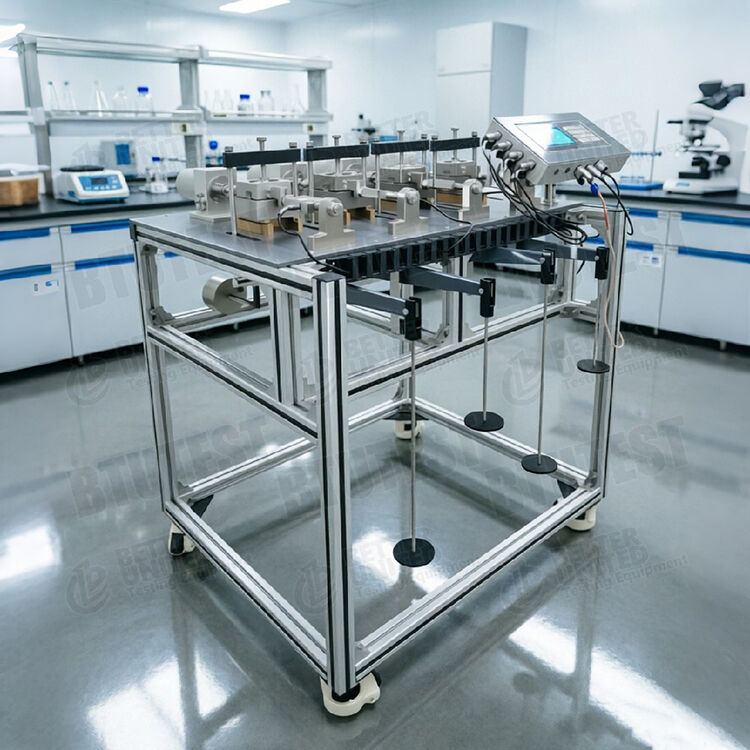
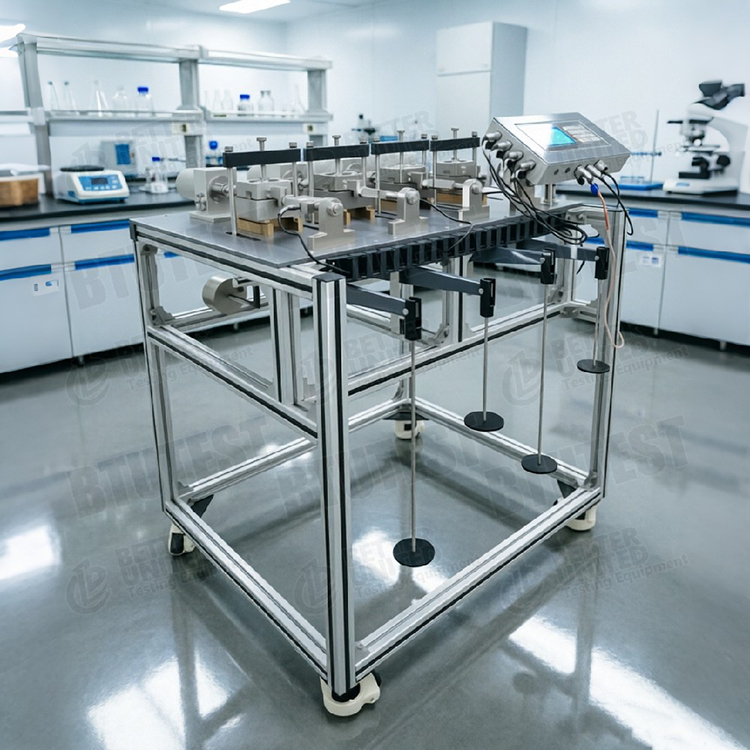
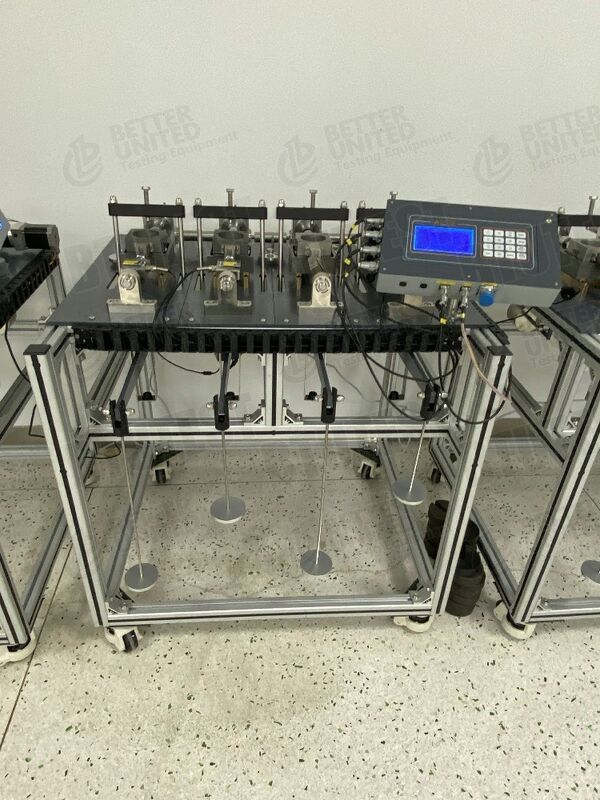
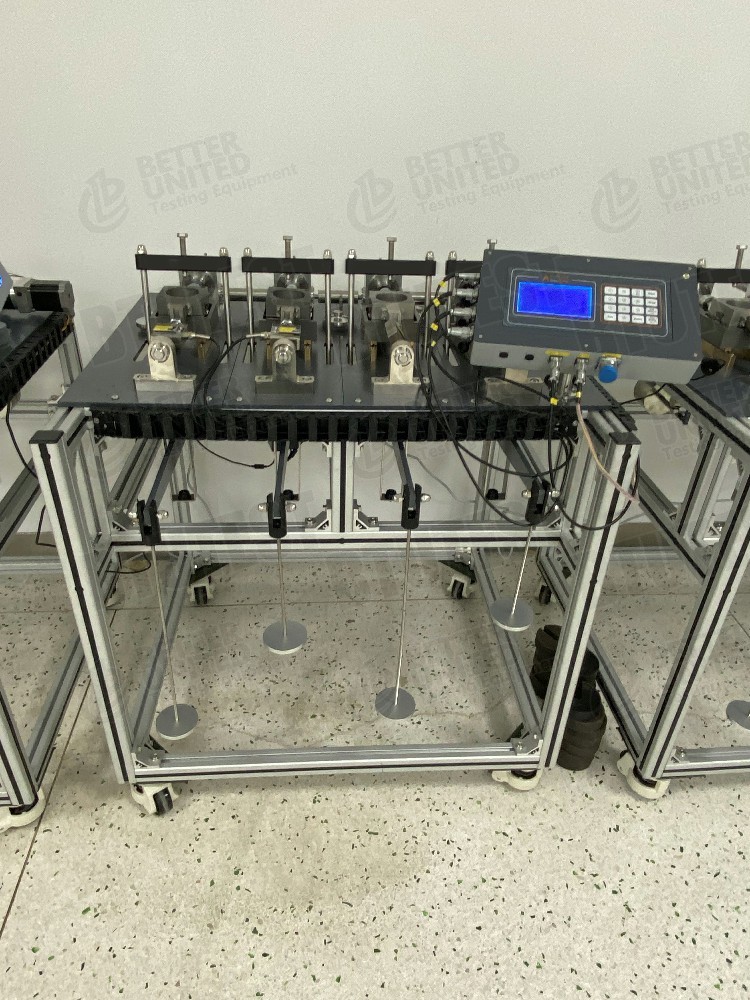
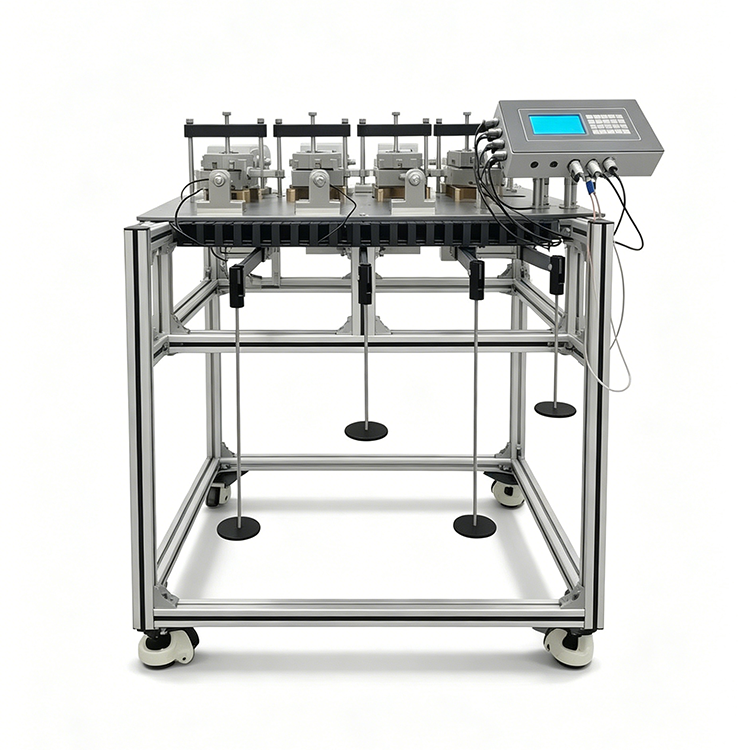
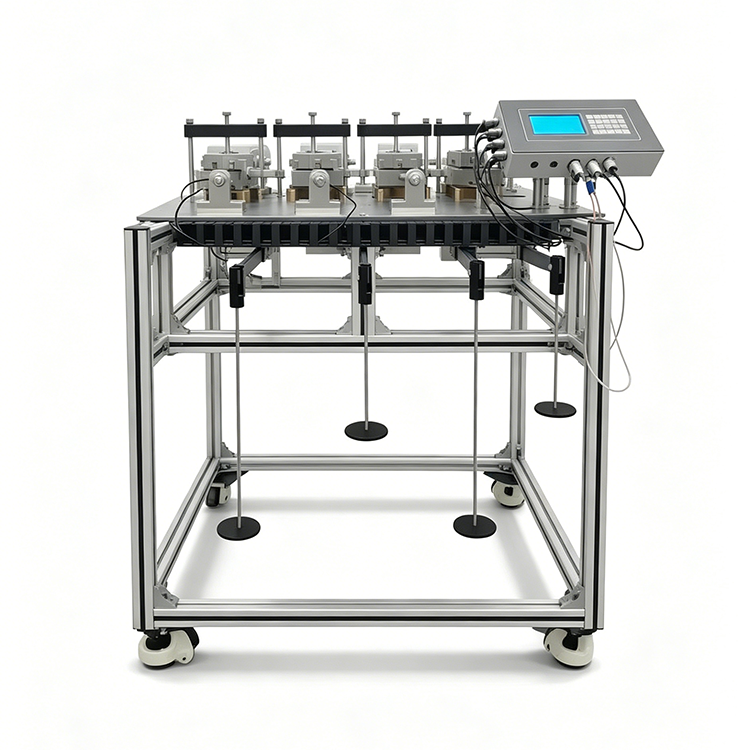
This series consists of four‑unit direct shear apparatuses used to determine the shear strength parameters (internal friction angle φ and cohesion c) of soils. Three models are available:
· BTU‑DDS‑4: Basic four‑unit direct shear apparatus (manual recording or external meter reading).
· BTU‑DDS‑4A: Four‑unit automatic data acquisition direct shear apparatus, equipped with a data logger and Windows software for automatic data acquisition and processing.
· BTU‑DDS‑4Q: Four‑unit automatic direct shear apparatus with pneumatic loading (replaces lever loading) and advanced control.
Common features:
· Specimen size: Φ61.8 mm × H20 mm (standard cutting ring).
· Shear speed: 0.00001 – 6 mm/min, stepless adjustment.
· Maximum shear displacement: 8 mm.
· Four load cells for measuring horizontal shear force.
· Main differences among models are in loading method, control method and data acquisition capability.
· ASTM D3080(Standard test method for direct shear test of soils)
· ISO 17892‑10(Geotechnical testing – Direct shear test)
· BS 1377‑7(British Standard – Direct shear test)
· JGS 0561(Japanese direct shear test method)
· Chinese GB/T 50123‑2019(Standard for soil test methods)
All three models can meet the basic requirements for shear rate, specimen size and normal stress range specified in the above standards.
| Parameter | BTU‑DDS‑4 | BTU‑DDS‑4A | BTU‑DDS‑4Q |
| Instrument name | Four‑unit direct shear apparatus | Four‑unit automatic acquisition direct shear apparatus | Four‑unit automatic direct shear apparatus |
| Specimen size (mm) | Φ61.8×H20 | Φ61.8×H20 | Φ61.8×H20 |
| Shear speed (mm/min) | 0.00001 – 6 (stepless) | 0.00001 – 6 (stepless) | 0.00001 – 6 |
| Loading method | Lever loading (lever ratio 12:1) | Lever loading (12:1) | Pneumatic loading |
| Control method | 16‑key membrane keypad + 240×128 LCD | 16‑key membrane keypad + 240×128 LCD | 16‑key membrane keypad + 240×128 LCD |
| Max. shear displacement | 8 mm | 8 mm | 8 mm |
| Consolidation pressure (kPa) | 0‑50‑100‑200‑300‑400 (stepwise weights) | 0‑50‑100‑200‑300‑400 (stepwise weights) | 25‑400 (continuously adjustable via air pressure) |
| Sensors | 4 load cells | 4 load cells | 4 load cells |
| Data acquisition | None (manual reading) | Data logger + Windows acquisition/processing software | automatic acquisition + software |
Note: DDS‑4A and DDS‑4Q both have automatic data acquisition; the main difference is loading method. DDS‑4 is manual / semi‑automatic (no software).
· Four‑unit structure– Four shear boxes can be tested simultaneously; each shear box independently measures horizontal shear force via its own load cell.
· Shear speed– 0.00001‑6 mm/min continuously adjustable, covering slow shear (0.02‑0.05 mm/min) to fast shear (0.8‑1.2 mm/min) and also suitable for cyclic shear.
· Load cells– Replace traditional proving rings; provide direct electrical output with high accuracy (±0.1% FS), facilitating automatic data acquisition.
· Maximum shear displacement 8 mm– Meets conventional direct shear test requirements (usually up to 6 mm or 10% of diameter).
· Consolidation pressure–
o DDS‑4 / 4A: Lever loading (12:1) with fixed pressure steps (0, 50, 100, 200, 300, 400 kPa) using weights.
o DDS‑4Q: Pneumatic loading, continuously adjustable from 25 to 400 kPa, no need to change weights; allows any intermediate pressure value.
· Control method– All models use a membrane keypad + non‑touch LCD (240×128) for setting shear rate, start/stop, etc.
· Data acquisition (DDS‑4A / 4Q only)–
o External data logger connected to the 4 load cells.
o Windows software (BTU acquisition & processing software) displays real‑time shear force‑displacement curves, automatically saves data, exports to Excel.
o Post‑processing module: plots strength envelope from peak shear stresses at different normal stresses and calculates c and φ.
· Routine geotechnical testing: determination of shear strength of cohesive soils, silt, sand, etc.
· Slope stability analysis: provides c and φ parameters.
· Bearing capacity evaluation: provides strength parameters for shallow and deep foundation design.
· Fill engineering: quality control of backfill materials.
· Teaching laboratories: university soil mechanics lab courses.
· Research applications: cyclic shear tests (strength degradation under cyclic loading); pneumatic loading model (DDS‑4Q) allows continuously variable normal stress to simulate different depths.
· Four‑unit configuration– Four different normal stresses tested simultaneously; four times the efficiency of a single‑unit apparatus.
· Wide stepless shear speed range– Meets various test standards (slow shear, fast shear, cyclic shear).
· Load cells– High accuracy (0.1% FS), far better than traditional proving rings (typically 1% FS).
· Lever loading (DDS‑4/4A)– Simple, reliable, no power required, low cost.
· Pneumatic loading (DDS‑4Q)– Continuously adjustable normal stress, no weight changing, simulates arbitrary pressure paths, higher automation.
· Automatic acquisition and processing (4A/4Q)– Reduces human error, automatically calculates c and φ, generates reports, saves time.
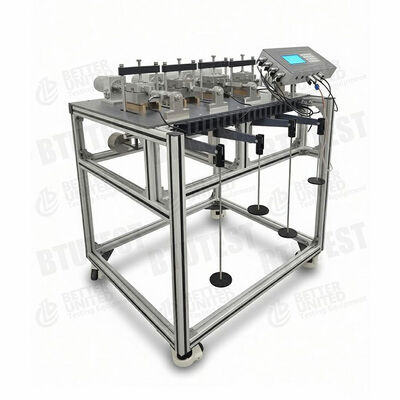
· Lightweight frame– Aluminium profile construction (from previous document), corrosion resistant, with castors.
· Non‑touch screen– Suitable for laboratory environment (resists soil and water, can be operated with gloves).
Select the model according to testing requirements:
| Requirement | Recommended Model | Reason |
| Limited budget, only teaching demonstration or few tests, manual reading acceptable | BTU‑DDS‑4 | Basic model, no automatic acquisition, lowest cost |
| Routine research or quality control, need automatic data acquisition and processing | BTU‑DDS‑4A | Lever loading + automatic acquisition, good cost‑performance |
| Need continuously variable normal stress (e.g. strength at various pressures) | BTU‑DDS‑4Q | Pneumatic loading, continuously adjustable pressure, no weights |
| Cyclic shear testing | DDS‑4A or 4Q | Requires software that supports cyclic shear mode (check software version) |
| Want to eliminate weight handling completely, higher automation | DDS‑4Q | Pneumatic loading with programmable pressure control |
| Only conventional fast/slow shear, fixed pressure steps sufficient | DDS‑4A | Lever loading has lower cost and still provides automatic acquisition |
Note: Although DDS‑4 could later be upgraded with a data logger, it is generally more economical to buy DDS‑4A or 4Q directly.
Example usingBTU‑DDS‑4A(lever loading + automatic acquisition):
1. Specimen preparation
o Cut undisturbed soil or prepare remoulded specimens using Ø61.8×20 mm cutting rings. Prepare at least 4 specimens (for 4 normal stress levels, e.g. 50, 100, 200, 400 kPa).
o Saturate (soak) if required or keep natural water content.
2. Specimen installation
o Place the ring with specimen into the lower shear box and align with the upper box.
o Install porous stone and loading piston.
o Position the lever loading assembly and apply weights according to the target normal stress (lever ratio 12:1; calculate required mass).
3. Set parameters
o Use the LCD screen and keypad to set shear rate (e.g. 0.8 mm/min for fast shear).
o Set shear displacement limit (e.g. 6 mm).
o In the acquisition software, input specimen ID, normal stress, shear rate, etc.
4. Start shearing
o Start the motor to move the shear box horizontally.
o Load cells continuously measure shear force; displacement sensor records displacement.
o Software displays real‑time shear stress‑displacement curves for all four channels.
5. Stop condition
o When the preset shear displacement (e.g. 6 mm) is reached or the shear stress drops significantly after a peak, the motor automatically stops (software can set stop conditions).
6. Repeat or continue
o Remove weights, take out specimens, clean shear boxes.
o The four units run simultaneously – four different normal stress tests are conducted in parallel (assuming independent control, usually all run at the same time).
7. Data processing
o Software automatically records the peak shear stress for each specimen.
o Input the four normal stresses (σ) and corresponding peak shear stre.
o Software automatically plots τ‑σ scatter points, fits a straight line, calculates cohesion c (intercept) and internal friction angle φ (slope).
o Generates a test report (including curves, c, φ values) and can export to Excel.
8. Cleaning and maintenance
o Clean shear boxes, load cells, porous stones.
o Check lever and drive components; unload weights when not in use for long periods.
ForDDS‑4Q(pneumatic loading):
· No need to manually add weights. Set the desired normal pressure via a pressure regulator (e.g. any values such as 30, 60, 120, 240 kPa, etc.).
· The “apply weights” step is replaced by “set air pressure and stabilise”.
· All other steps are the same as for DDS‑4A.
Summary:The BTU‑DDS‑4/4A/4Q series offers a complete product line from basic manual operation to fully automatic pneumatic loading. The DDS‑4 is suitable for budget‑limited applications, the DDS‑4A offers the best cost‑performance ratio with automatic acquisition, and the DDS‑4Q is ideal for advanced research requiring continuously variable normal stress. Users should select the appropriate model based on testing frequency, automation requirements, and preferred normal loading method.
Enter Your Message

Try our best,make things better. People first,Innovative Productivity,Common Solutions
| Hebei Better United Import And Export Co., Ltd. |
| Hejie Town,Xianxian County,Cangzhou City,Hebei Province,China |
| 86-151-2879-5929 |
| sales@btutest.com |